
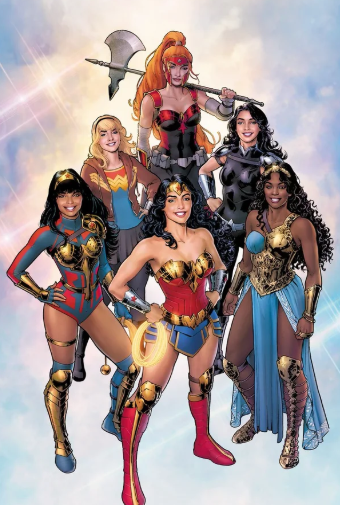
Wonder Woman is not merely a character in a comic book; she is a socio-political statement wrapped in primary colors. Since her debut in 1941, Diana of Themyscira has served as a barometer for the status of women in society. Created by psychologist William Moulton Marston, Wonder Woman was intended to be a new type of superhero—one who triumphs not through fists alone, but through love, truth, and psychological liberation. This pillar page examines the profound implications of her existence and how she continues to shape the feminist discourse in popular media.
The Historical Genesis of Wonder Woman as a Feminist Icon
To understand Wonder Woman, one must understand her creator, William Moulton Marston. A psychologist and the inventor of the systolic blood pressure test (a precursor to the polygraph), Marston believed that women were inherently more honest and capable of leading society toward peace. His creation of the “Lasso of Truth” was a direct metaphorical extension of his work with lie detection.
The Marston Influence and Early Suffragette Roots
Marston’s personal life was deeply intertwined with the early feminist movement. He lived in a polyamorous relationship with his wife, Elizabeth Holloway, and Olive Byrne, the niece of birth control pioneer Margaret Sanger. These influences are evident in the early comics, where Diana often broke chains—a literal and figurative representation of women’s liberation from patriarchal constraints. The “Why” behind her creation was to provide a role model for girls that balanced the hyper-masculinity of characters like Superman and Batman.

The Evolution of Empowerment: From Golden Age to the Modern Era
Wonder Woman’s journey has not been a straight line of progress. Following Marston’s death in 1947, her feminist edge was often dulled. During the 1950s and 60s, she was frequently depicted in domestic roles or romantic subplots that undermined her original mission.
The 1970s Revival and the Gloria Steinem Influence
In 1972, Gloria Steinem placed Wonder Woman on the first cover of Ms. Magazine, reclaiming her as a feminist symbol. This sparked a revival that led to the iconic Lynda Carter television series. This era emphasized Diana’s independence and her refusal to be a “damsel in distress.”
| Era | Feminist Focus | Primary Character Trait |
|---|---|---|
| Golden Age (1940s) | Suffrage & Liberation | Revolutionary Leader |
| Silver Age (1950s-60s) | Domesticity & Romance | The “Working Girl” |
| Bronze Age (1970s-80s) | Equal Rights & Autonomy | Independent Icon |
| Modern Age (2000s-Present) | Global Justice & Intersectionality | The Warrior Diplomat |

The Duality of Diana: Diplomat vs. Warrior Archetypes
One of the most complex implications of Wonder Woman is her dual nature. She is a trained Amazonian warrior, yet her primary mission is to bring peace to “Man’s World.” This tension reflects the real-world feminist struggle of balancing strength with empathy.
Expert Analysis: The Significance of Themyscira
Themyscira, or Paradise Island, serves as a feminist utopia. By removing the influence of men, the Amazons are able to develop a society based on science, art, and philosophy. This setting allows writers to explore what a society built on “feminine” values looks like, providing a stark contrast to the conflict-driven world outside its borders.
- The Lasso of Truth: Represents the power of objective reality and psychological transparency.
- The Bracelets of Submission: Originally a reminder of the Amazons’ past enslavement, repurposed as a tool for defense and self-control.
- The Tiara: A symbol of her royal status and a versatile weapon, representing the intellect as a sharp tool.
Strategic Insights: Modern Representation and Cultural Impact
In the 21st century, Wonder Woman has transitioned into a cinematic powerhouse. The 2017 film directed by Patty Jenkins was a watershed moment for female-led superhero movies. It proved that audiences were hungry for stories where a woman’s power is not derived from her trauma, but from her inherent sense of justice.
Pro Tips for Analyzing Female Superheroes
When evaluating the feminist impact of a character like Wonder Woman, look for the “Smurfette Principle.” Does she exist only as the token female in a male group, or does she have her own agency and supporting cast? Wonder Woman succeeds because she has her own mythology, her own villains (like Ares and Cheetah), and her own moral code that does not rely on male validation.
Checklist for Top-Tier Feminist Character Writing
- Agency: Does the character make her own choices?
- Internal Logic: Is her power set consistent and not sexualized for the male gaze?
- Relatability: Does she face systemic challenges that resonate with real-world women?
- Mentorship: Does she support and elevate other female characters?
Frequently Asked Questions (FAQ)
- Why is Wonder Woman considered a feminist icon?
- She was specifically created to provide a female alternative to male-dominated power fantasies, emphasizing peace, truth, and the inherent strength of women.
- What was the controversy surrounding Wonder Woman’s UN Ambassadorship?
- In 2016, the UN named her an Honorary Ambassador for the Empowerment of Women and Girls, but the decision was met with protests regarding her sexualized appearance in certain comic iterations, highlighting the ongoing debate over her visual representation.
- How does Wonder Woman differ from Captain Marvel or Supergirl?
- While all are powerful, Wonder Woman’s origins are rooted in mythology and a separatist utopia, whereas Supergirl is often defined by her relationship to Superman, and Captain Marvel by her military background.
- What is the “Marston Theory” in her early comics?
- William Moulton Marston believed that “loving submission” to a benevolent authority (symbolized by women) was the key to world peace, a theory he embedded in the early Diana stories.
- How has her costume changed to reflect modern feminism?
- Modern designs have shifted away from the “bathing suit” look toward functional Greek battle armor, emphasizing her role as a soldier and protector rather than a pin-up.