
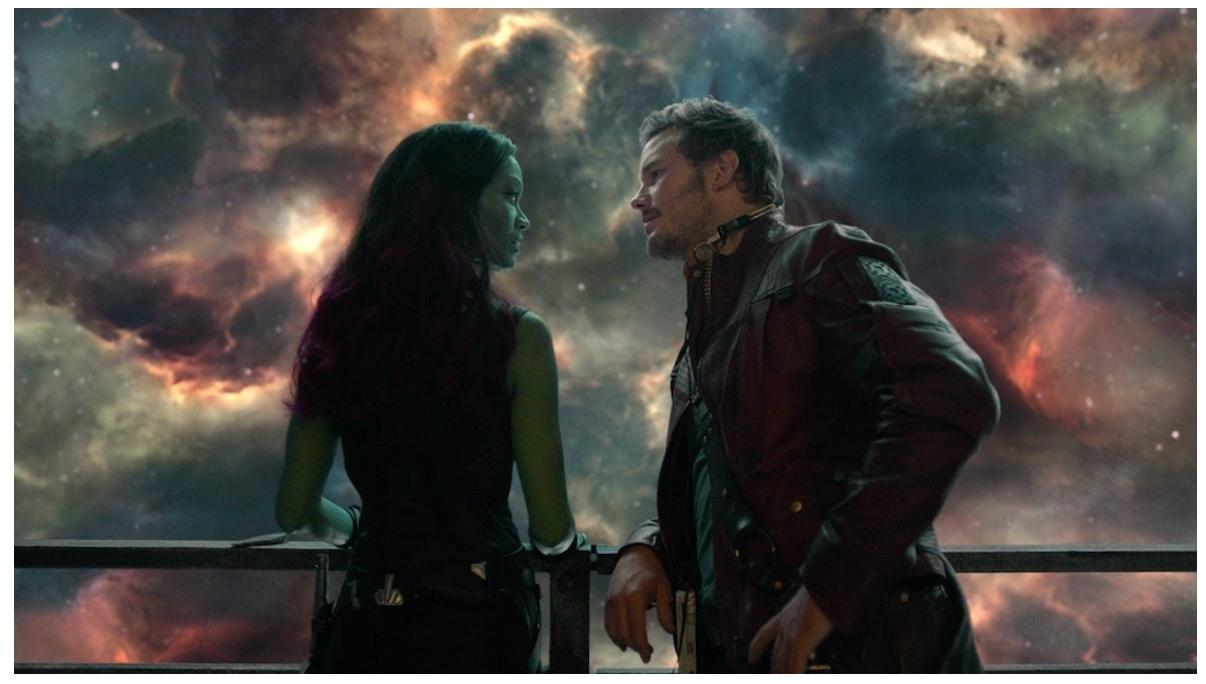
The Origins of a Cosmic Connection: Two Broken Souls Collide
The Marvel Cinematic Universe has introduced audiences to countless dynamics, but few are as psychologically rich and emotionally devastating as the relationship between Peter Quill (Star-Lord) and Gamora. Their initial encounter on the vibrant, bustling world of Xandar was anything but romantic; it was a violent, chaotic physical altercation driven by conflicting bounties and survival instincts. However, beneath the surface of this kinetic introduction lay the foundation of a profound narrative parallel. Both characters were victims of cosmic kidnappings, stripped of their childhoods, and forced to navigate a hostile universe under the shadow of abusive, god-like father figures.
Peter Quill’s Mask of Humor and Deflection
Peter Quill’s abduction from Earth mere moments after his mother’s tragic death left him emotionally stunted. Raised by Yondu Udonta and the ruthless Ravagers, Quill developed a survival mechanism built entirely on deflection, humor, and a manufactured rogue persona. His attachment to his Walkman and the “Awesome Mix Vol. 1” cassette tape was not merely a quirky character trait; it was a desperate, tangible tether to his lost humanity and the unconditional love of his mother. When he first meets Gamora, Quill attempts to filter her through his usual lens of detachment and bravado, masking a deep-seated fear of genuine connection.
Gamora’s Burden as the Deadliest Woman in the Galaxy
Conversely, Gamora’s trauma manifested in cold, calculated stoicism. As the adopted daughter of Thanos, the Mad Titan who slaughtered half of her species right in front of her, Gamora was forged in the fires of unimaginable abuse. She was cybernetically enhanced and psychologically conditioned to be a living weapon. Her moniker, “The Deadliest Woman in the Galaxy,” was both a shield and a prison. When her path collides with Star-Lord’s, she views him as an undisciplined, foolish obstacle. Yet, his unabashed emotional transparency slowly begins to crack the impenetrable armor she had spent a lifetime building.

Salvaging Souls in the Cosmic Dust: The Catalyst of Shared Trauma
The true turning point in the emotional journey of Gamora and Star-Lord occurs within the sterile, oppressive walls of the Kyln prison. It is here, amidst the literal and metaphorical cosmic dust of their ruined lives, that the concept of “salvaging souls” comes to the forefront. They are surrounded by murderers, thieves, and outcasts, yet they recognize a unique, unspoken grief in one another. The process of salvaging a soul is not clean or instantaneous; it requires digging through layers of defensive mechanisms and confronting the ugliest parts of one’s past.
Finding Common Ground Amidst Galactic Chaos
The alliance formed in the Kyln is initially born of pure necessity—the promise of sharing the immense payout for the Orb containing the Power Stone. However, as they orchestrate their escape, the transactional nature of their partnership begins to dissolve. Quill risks his life to save Gamora from Drax’s vengeance, not for the money, but because he recognizes a kindred spirit who has been unfairly defined by the sins of her abuser. This act of selfless intervention forces Gamora to reevaluate her understanding of trust, a concept Thanos had systematically beaten out of her.
The Significance of the Walkman and Music as an Emotional Bridge
Music serves as the primary linguistic bridge between their isolated worlds. In a pivotal scene on Knowhere, Quill shares his headphones with Gamora, introducing her to the concept of dancing—an act she previously dismissed as foolish. This moment is a masterclass in visual storytelling. By sharing his music, Quill is sharing a piece of his soul, inviting Gamora into his most vulnerable sanctuary. Gamora’s initial resistance, followed by her subtle yielding to the melody, symbolizes her tentative first step toward reclaiming her own autonomy and capacity for joy.
- The “Pelvic Sorcery” Metaphor: Quill’s humorous reference to the legend of Footloose represents his attempt to use Earth pop culture to break Gamora’s assassin conditioning.
- Tactile Vulnerability: The physical act of placing the headphones over her ears is one of the first times Gamora experiences touch that is not associated with combat or pain.
- Shared Silence: The quiet moments they share looking out into the cosmos highlight their transition from solitary survivors to a unified front against universal despair.

Navigating Vulnerability: The Unspoken Dance of Trust
As the Guardians of the Galaxy transition from a ragtag group of criminals into a cohesive, albeit dysfunctional, family unit, the dynamic between Peter and Gamora deepens significantly. By the events of Guardians of the Galaxy Vol. 2, their relationship exists in a delicate liminal space. There is undeniable romantic tension, but it is heavily guarded by the lingering scars of their respective pasts. This unspoken dance of trust becomes the emotional anchor of their ongoing narrative.
Breaking Down Gamora’s Walls
Gamora’s journey toward emotional openness is arduous. When confronted with Quill’s biological father, Ego the Living Planet, it is Gamora who remains deeply skeptical. Her history with a manipulative father figure allows her to see the cracks in Ego’s utopian facade long before Peter does. Her desperate attempts to warn Quill stem from a profound, terrifying realization: she cares for him deeply and cannot bear the thought of him being consumed by the same paternal toxicity that ruined her life. Her vulnerability is expressed not through traditional romantic declarations, but through fierce, protective loyalty.
Star-Lord’s Evolution from Scavenger to Leader
For Peter, loving Gamora forces him to mature. He can no longer exist solely as the carefree rogue. Gamora demands a higher standard of accountability from him. When Peter discovers the horrifying truth about Ego’s role in his mother’s death, it is the bond he shares with Gamora and the rest of the Guardians that gives him the strength to reject godhood. He chooses the messy, painful reality of human connection over the sterile perfection of cosmic isolation. Gamora becomes his true north, guiding him away from self-destructive tendencies and toward genuine leadership.

The Tragic Sacrifices and the Infinity War Toll
The narrative trajectory of Gamora and Star-Lord takes a devastating, tragic turn during the events of Avengers: Infinity War. The cinematic universe masterfully leverages the deep emotional groundwork laid in previous films to deliver one of the most gut-wrenching sequences in modern blockbuster history. The ultimate test of their love is framed not by a grand romantic gesture, but by a horrifying, impossible choice dictated by the looming threat of Thanos.
The Vormir Tragedy and the Price of the Soul Stone
Before confronting Thanos on Knowhere, Gamora extracts a harrowing promise from Peter: if she is captured, he must kill her to prevent Thanos from learning the location of the Soul Stone. This request fundamentally contradicts Peter’s instinct to save the people he loves. When the moment arrives, the sheer agony on Quill’s face as he pulls the trigger—only for the blaster to shoot bubbles—is a testament to the inescapable tragedy of their situation. Thanos’s subsequent sacrifice of Gamora on Vormir is a grotesque perversion of love, permanently fracturing the emotional core of the Guardians.
Peter Quill’s Devastating Grief and Its Galactic Consequences
Upon learning of Gamora’s death during the confrontation on Titan, Peter Quill’s reaction is visceral, immediate, and catastrophic. His decision to attack Thanos, effectively breaking the heroes’ hold on the Mad Titan and dooming half the universe, is frequently debated by fans. However, from a psychological standpoint, it is the only reaction that aligns with his character. Gamora was the soul he had salvaged from the cosmic dust; she was his family, his redemption, and his future. Losing her shattered the fragile emotional stability he had fought so hard to build, plunging him back into the abyss of unmanageable grief.
This moment of profound weakness highlights the dangerous duality of deep emotional attachment. The very love that healed Peter Quill also became the catalyst for his greatest failure, emphasizing the immense, sometimes terrifying weight of vulnerability.

Alternate Timelines and the Complex Path to Reconciliation
The introduction of time travel in Avengers: Endgame brings a complex, bittersweet resolution to the Gamora and Star-Lord saga. The Gamora who returns to the primary timeline is a variant from 2014—a version of the character who has never experienced the Kyln, never listened to the Walkman, and never fallen in love with Peter Quill. This brilliant narrative choice forces the characters, and the audience, to confront the reality that love cannot be simply copy-pasted across timelines.
The 2014 Gamora Variant: A Stranger with a Familiar Face
For Peter, encountering the 2014 Gamora is a psychological torture. He is faced with the exact physical manifestation of the woman he loves, but she looks at him with the cold, calculating eyes of Thanos’s deadliest assassin. His instinct is to forcefully project his memories and feelings onto her, desperately trying to reignite a spark that, for her, never existed. This dynamic explores profound themes of grief, acceptance, and the painful realization that you cannot force someone to be who they used to be.
Letting Go vs. Holding On: The Climax of Guardians Vol. 3
In Guardians of the Galaxy Vol. 3, the thematic arc of their relationship reaches its mature conclusion. The film meticulously avoids the cliché trope of the 2014 Gamora suddenly regaining her alternate self’s memories. Instead, it respects her autonomy. She finds her own path with the Ravagers, forging a new identity entirely separate from both Thanos and the Guardians. Peter’s ultimate growth lies in his ability to finally let go. By accepting that this Gamora is not “his” Gamora, he honors the memory of the woman he lost while allowing the new Gamora the freedom to exist on her own terms.

The Enduring Legacy of Gamora and Star-Lord’s Romance
The romance between Gamora and Star-Lord stands out in the superhero genre because it is deeply rooted in mutual healing rather than mere physical attraction or destiny. They were two broken individuals drifting through the cosmic dust, actively choosing to salvage one another. Their story is not a fairy tale; it is scarred by trauma, interrupted by tragedy, and ultimately resolved through the painful but necessary act of moving on.
Redefining Love in the Marvel Cinematic Universe
Unlike the idealized romances often portrayed in cinema, Peter and Gamora’s relationship is messy and heavily guarded. It redefines love as a continuous choice to show up for someone, even when their trauma makes them difficult to reach. It emphasizes that true romantic connection requires looking past the defensive masks people wear—whether that mask is a sarcastic outlaw persona or the stoic exterior of a hardened assassin.
Lessons on Healing and Found Family
Ultimately, their journey teaches profound lessons about the nature of found family. Bloodlines in their universe are often sources of pain (Thanos, Ego), but the bonds forged through shared adversity provide true salvation. Even though their romantic relationship does not end with a traditional “happily ever after,” the impact they had on each other’s souls is permanent. Gamora taught Peter how to lead and love selflessly, while Peter taught Gamora how to feel, dance, and embrace the vibrant chaos of life.

Analyzing the Cinematic Parallels: A Character Evolution Comparison
To fully grasp the magnitude of their intertwined destinies, it is essential to analyze the structural parallels of their character arcs. Both characters undergo massive psychological shifts from their introduction in 2014 to the conclusion of their shared narrative. The data below breaks down the specific evolutionary metrics of Peter Quill and Gamora, highlighting how their interaction served as the primary catalyst for their individual growth.
| Evolutionary Metric | Peter Quill (Star-Lord) | Gamora |
|---|---|---|
| Initial Trauma Response | Deflection, humor, emotional avoidance, and hyper-independence. | Stoicism, violence, emotional suppression, and rigid obedience. |
| View of Family | Avoidant; runs from the memory of his mother and the reality of Yondu. | Traumatic; views family as a mechanism of control and survival (Thanos/Nebula). |
| Catalyst for Change | Realizing Gamora’s inherent nobility despite her dark reputation. | Experiencing Quill’s selfless, illogical acts of bravery and compassion. |
| Peak Vulnerability | Pulling the trigger on Knowhere to honor his impossible promise to her. | Admitting her fear of Thanos and begging Quill to take her life if captured. |
| Final Resolution | Accepting grief, returning to Earth, and letting go of the past. | Forging a new, independent destiny free from the expectations of others. |
This comparative analysis visually underscores the symbiotic nature of their relationship. Every step forward for Gamora was mirrored by a maturation in Quill, proving that their cosmic connection was the defining architectural pillar of the Guardians’ overarching storyline.
Frequently Asked Questions (FAQ)
- Why did Gamora fall in love with Star-Lord?
- Gamora fell in love with Star-Lord because he represented everything Thanos tried to destroy in her: spontaneity, genuine emotion, and unconditional loyalty. Beneath his foolish exterior, she saw a deeply compassionate man who was willing to risk his life for others without the promise of reward. His introduction of music and dance into her life served as a profound awakening to the joys of existence outside of warfare.
- Did the 2014 Gamora ever regain her memories in Guardians of the Galaxy Vol. 3?
- No, the 2014 Gamora variant does not regain the memories of the original Gamora who died on Vormir. Director James Gunn made a deliberate narrative choice to maintain the permanence of the original Gamora’s death. The 2014 Gamora is a distinctly different person who walks her own path, ultimately finding a sense of belonging with the Ravagers rather than rekindling a romance with Peter Quill.
- Was Star-Lord justified in attacking Thanos on Titan?
- From a purely tactical standpoint, his actions were catastrophic and directly led to the Blip. However, from a psychological and character-driven perspective, his reaction is entirely justified. Peter Quill is a character defined by immense loss (his mother, Yondu). Discovering that the love of his life had been murdered by her abuser triggered an uncontrollable, trauma-induced emotional breakdown. It is a deeply human flaw that grounds his character in realism.
- What is the significance of the song “Hooked on a Feeling” in their relationship?
- Blue Swede’s “Hooked on a Feeling” serves as the auditory motif for their relationship. It plays during their time in the Kyln, symbolizing the initial, chaotic spark of their connection. The upbeat, infectious nature of the song directly contrasts with the grim, deadly reality of their surroundings, perfectly encapsulating how their love story brought light into the darkest corners of the cosmic dust.