

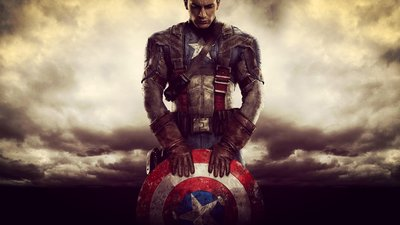
Among the numerous heroes in the Avengers Alliance, Captain America, Steve Rogers, has never relied on the power bestowed by the Super Soldier Serum or an official position granted by S.H.I.E.L.D. to establish his leadership. His authority stems from a unique “non – power – based leadership art” – he uses moral principles to build consensus, sets an example through his own actions, and serves as the spiritual anchor of the team in times of crisis. The core of this leadership is not about giving orders, but about uniting a group of superheroes with diverse personalities and disparate abilities into a cohesive whole through charisma and shared values. From the “slight tremble” of Mjölnir in “Avengers: Age of Ultron” to his rallying cry in “Avengers: Endgame”, Captain America has proven that true leadership lies in the humanistic glow behind his shield.

From “Trustworthy” to “Worthy of Following”
In the classic scene from “Avengers: Age of Ultron”, when Thor proposed that everyone try to lift Mjölnir, only Captain America managed to make the hammer budge slightly. This detail is by no means a coincidence – the magic of the hammer is essentially a test of “worthiness”, and Captain America’s “worthiness” forms the cornerstone of his non – power – based leadership. Unlike Iron Man, who has a brilliant mind and vast wealth, or Thor, who has Asgardian blood, Captain America has become the “moral yardstick” of the team through his unwavering moral stance.
The establishment of this moral authority begins with his adherence to principles. In “Captain America: Civil War”, when faced with the disagreement over the Sokovia Accords, his reason for refusal was not personal power. Instead, he questioned, “When the government decides to harm the innocent, who will stop us?” This vigilance towards “procedural justice” and defense of “individual conscience” carved out a third path for him, distinct from Iron Man’s pragmatism and Thor’s divine authority. He defined responsibility from the perspective of an ordinary person.
Action – Oriented Leadership
Captain America’s leadership art is reflected in countless “hands – on” moments. During the Battle of New York in “The Avengers”, when Iron Man proposed sending the nuclear bomb into space, instead of ordering any hero to carry out the task, Captain America rushed to Stark Tower himself to set up a passage. In “Captain America: The Winter Soldier”, when S.H.I.E.L.D. was infiltrated by Hydra, he did not rely on his official status to mobilize resources. Instead, he launched a guerrilla war on the streets with Falcon and Black Widow. This “leading – by – example” action model transformed him from a “leader” into a “companion – in – arms”.
In the final battle of “Avengers: Endgame”, when Thor was consumed by self – doubt and Iron Man refused to return, Captain America stood alone in front of the time – travel portal, shield in hand. Without a long speech, he simply shouted, “Avengers, assemble!” This simple action carried more weight than words, as everyone knew that he would be the first to charge into the fray. This “action – first” leadership style inspired trust in the team members that transcended hierarchical positions. They followed not the title of “Captain America”, but Steve Rogers, the man who always placed himself at the forefront of danger.
The Glue That Bridges Differences with Empathy
The members of the Avengers Alliance each have their own distinct personalities: Iron Man’s arrogance, Thor’s overconfidence, and the Hulk’s risk of losing control… Captain America’s unique value lies in his ability to use empathy as a bridge to transform these sharp – edged personalities into a well – coordinated team. In “The Avengers”, when Iron Man and Thor clashed due to ideological differences, instead of suppressing them with force, Captain America snapped them out of it with the words, “That’s enough! Aren’t we fighting for the Earth right now?” He understood the fear and sense of responsibility underlying the conflict and transcended personal grudges with a common goal.
Captain America’s shield has never borne any symbols of authority. It is merely a defensive tool made of vibranium, yet in his hands, it has become a spiritual totem that unites the team. The core lesson of this non – power – based leadership art is that true leadership is not about control, but about awakening – awakening the team’s belief in justice, trust in each other, and commitment to their original mission. In an era of technological worship and blind faith in power, Captain America has proven that when heroes choose to lead with morality rather than power, and inspire with actions rather than commands, the team ceases to be a mere aggregation of interests and becomes a community of shared beliefs.