
The Genesis of Leadership: Origins of Iron Man and Captain America
The Marvel Cinematic Universe and its comic book source material are fundamentally anchored by the dual pillars of Tony Stark’s Iron Man and Steve Rogers’ Captain America. Understanding the legacy of Iron Man requires a deep retrospective into his origins, particularly when contrasted with the genesis of Captain America. While Steve Rogers was born out of the patriotic fervor of World War II, a fragile man transformed by science into a symbol of unwavering morality, Tony Stark’s origin is rooted in the complex, morally ambiguous landscape of the modern military-industrial complex. Stark’s transformation in the caves of Afghanistan (or Vietnam in the original comics) represents a forced awakening. He was not a volunteer for a righteous cause; he was a war profiteer who had to literally build his own heart to survive the consequences of his own creations.
The Futurist Versus The Traditionalist
The dichotomy between these two leaders forms the emotional and tactical core of the Avengers. Iron Man is the quintessential futurist. His trauma drives him to constantly innovate, building “a suit of armor around the world.” He believes that technology and proactive defense are the only ways to ensure survival in an increasingly hostile universe. In stark contrast, Captain America relies on human resilience, historical precedent, and an unyielding moral compass. This ideological divide is not merely a philosophical debate; it dictates their operational strategies, their recruitment methods, and ultimately, their tragic conflict.
To fully grasp the depth of their contrasting origins, we must examine the specific dimensions of their character development and leadership methodologies. The following table breaks down the core differences that define their dynamic:
| Core Attribute | Iron Man (Tony Stark) | Captain America (Steve Rogers) |
|---|---|---|
| Catalyst for Heroism | Personal trauma and guilt over weapons manufacturing. | Inherent desire to serve and protect against tyranny. |
| Source of Power | Technological innovation, intellect, and financial resources. | Super-soldier serum, tactical genius, and moral fortitude. |
| Leadership Style | Pragmatic, authoritative, and deeply reliant on predictive modeling. | Inspirational, democratic, and focused on individual agency. |
| View on Authority | Initially rebellious, later advocates for institutional oversight (Accords). | Initially a soldier of the state, later distrusts institutions (S.H.I.E.L.D. fall). |
This foundational contrast is what makes their eventual brotherhood—and subsequent fracturing—so compelling. Stark’s evolution from a selfish billionaire to a self-sacrificing hero is measured largely by his interactions with Rogers’ unwavering idealism.

The Anchor of Humanity: Iron Man and Pepper Potts
If Captain America represents Tony Stark’s ideological foil, Virginia “Pepper” Potts represents his emotional anchor. The narrative arc of Iron Man is inextricably linked to his relationship with Pepper. What began as a traditional dynamic between an eccentric billionaire and his hyper-competent executive assistant evolved into one of the most grounded, mature, and consequential partnerships in modern superhero storytelling. Pepper Potts is not merely a love interest; she is the operational conscience of Stark Industries and the primary reason Tony Stark was able to retain his humanity amidst his obsessive technological pursuits.
From Assistant to Savior and CEO
The evolution of Pepper Potts is marked by several critical milestones that showcase her indispensability. When Tony returned from captivity, it was Pepper who managed the fallout of his sudden decision to shut down the weapons manufacturing division. She navigated the corporate espionage orchestrated by Obadiah Stane, risking her own life to extract the data necessary to expose his treason. Furthermore, her role transitioned from managing Tony’s schedule to managing his legacy when she was appointed CEO of Stark Industries. This promotion was not a token gesture; it was Tony’s acknowledgment that while he could build the future in his lab, only Pepper had the acumen and stability to manifest that future in the real world.
The depth of their relationship is illustrated through several multidimensional layers of trust and shared trauma. Consider the following pivotal aspects of their partnership:
- The Literal Keeper of His Heart: The symbolic weight of Pepper replacing Tony’s original arc reactor, framing it with the inscription “Proof That Tony Stark Has a Heart,” establishes her early on as his emotional savior.
- Navigating PTSD and Obsession: Following the Battle of New York, Tony’s severe PTSD manifested in the obsessive construction of the Iron Legion. Pepper stood as the sole voice of reason, forcing him to confront his mental health and the collateral damage his anxiety was causing to their relationship.
- The Ultimate Battlefield Equal: Pepper’s culmination into the armored hero “Rescue” during the final stand against Thanos signifies her complete integration into Tony’s world. She fought not just as his wife, but as his equal, defending the universe to protect the family they had built.
These elements solidify Pepper Potts as the unsung hero of the Iron Man saga. Her ability to challenge Tony’s narcissism, manage his self-destructive tendencies, and eventually share in his ultimate sacrifice makes their romance a foundational pillar of his overall character arc.

A Father Figure Forged in Iron: The Spider-Man Mentorship
As Tony Stark matured, his narrative shifted from self-discovery to legacy management. This transition is most beautifully and tragically realized in his mentorship of Peter Parker, the spectacular Spider-Man. The dynamic between Iron Man and Spider-Man transcends the typical superhero team-up; it is a deeply nuanced surrogate father-son relationship that fundamentally altered the trajectories of both characters. Tony saw in Peter a reflection of his own youthful brilliance, but unburdened by the cynicism and dark past that haunted the Stark bloodline. By recruiting Peter, Tony took on the ultimate responsibility: guiding a teenager with god-like power to become a better man than he ever was.
The Burden of Responsibility and Technological Ascension
The mentorship began with a pragmatic recruitment during the superhero civil war, but quickly evolved into a profound emotional investment. Tony provided Peter with state-of-the-art technology—upgrading him from a homemade onesie to the highly advanced Stark Suit, and eventually the nanotechnology-driven Iron Spider armor. However, the technology was merely a vessel for the true lessons Tony sought to impart. He implemented protocols like the “Training Wheels Protocol” not just to protect Peter physically, but to temper his impatience and instill a deep sense of accountability.
The complexity of Tony’s mentorship is evident in the specific methodologies he employed to shape Peter’s hero journey. These strategies were designed to prevent Peter from making the same catastrophic mistakes Tony had made in his past:
- The “Tough Love” Ultimatum: When Peter recklessly endangered civilians on the Staten Island Ferry, Tony confiscated the suit, delivering the iconic line, “If you’re nothing without the suit, then you shouldn’t have it.” This forced Peter to rely on his inherent bravery and intellect, rather than Stark’s technology.
- Protection Through Innovation: The creation of the Iron Spider suit was a direct response to Tony’s darkest fears—that he would not be able to protect the kid from cosmic threats. The suit’s deployment during the invasion of Earth was a desperate, love-driven act of protection.
- The Weight of Succession: Tony’s post-mortem gift of the E.D.I.T.H. glasses carried the immense burden of his legacy. It was a test of Peter’s readiness to step out of the shadow of his mentor and make independent, world-altering decisions.
The emotional climax of this relationship—Tony watching Peter turn to dust, and later, Tony sacrificing his own life to ensure Peter’s resurrection—cements their bond as one of the most emotionally resonant arcs in modern fiction. Tony’s legacy is forever carried in the moral framework he helped build within Spider-Man.

Forging the Future: Ironheart’s Deep Ties to the Iron Man Trilogy
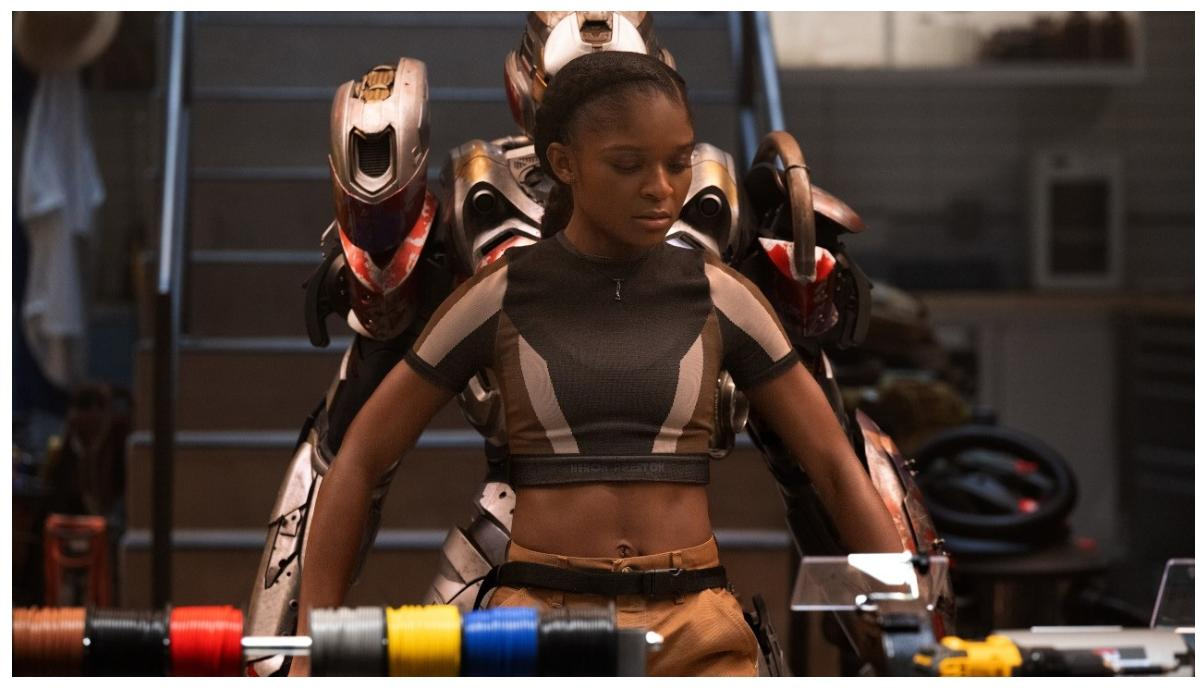
While Spider-Man inherited Tony Stark’s moral legacy and everyday heroism, the direct continuation of his technological genius and armored warfare falls to Riri Williams, known as Ironheart. The introduction of Ironheart is not a mere replacement strategy; it is a meticulously crafted homage that features profound, structural connections to the original Iron Man trilogy. Riri’s journey mirrors Tony’s early days, yet it is completely reframed through the lens of a young, brilliant Black woman operating without the infinite resources of a billionaire empire. Her narrative serves as a bridge between the foundational era of the MCU and its future, proving that the spirit of Iron Man is an idea that transcends Tony Stark himself.
Parallel Genesis: The Cave Versus The Dorm Room
The thematic parallels between Tony Stark’s and Riri Williams’ origins are striking and intentional. Tony built his first armor (Mark I) in a damp, terrorist-controlled cave in Afghanistan, using literal scraps of his own missiles. It was an act of desperate survival and a reclamation of his genius. Decades later, Riri Williams reverse-engineers obsolete Stark technology in her cramped MIT dorm room. While she isn’t held hostage by terrorists, she is fighting her own battles against systemic limitations, grief, and a world that constantly underestimates her. Both characters utilize their unparalleled intellect to forge armor out of discarded parts, turning vulnerability into invincibility.
The connections to the Iron Man trilogy extend far beyond the mere act of building a suit. The narrative DNA of Riri’s journey is heavily spliced with elements from Tony’s earliest adventures, creating a rich tapestry of callbacks and thematic continuations:
- The Obadiah Stane Connection: Ironheart’s lore is deeply entangled with the legacy of Obadiah Stane, Tony’s original mentor-turned-nemesis. The presence of Zeke Stane (Obadiah’s son) or thematic stand-ins in Riri’s story arcs forces her to confront the same brand of corporate greed and technological weaponization that Tony fought in his first cinematic outing.
- The Ten Rings Resonance: Just as the Ten Rings organization was the catalyst for Tony’s transformation, elements of clandestine, ancient organizations seeking to exploit modern technology frequently serve as the crucible for Riri’s development as a hero.
- The A.I. Mentor Dynamic: In the comics, Riri’s operating system is an artificial intelligence modeled directly after Tony Stark’s consciousness. This creates a literal continuation of Tony’s mentorship, allowing his digitized ghost to guide her through the engineering and ethical dilemmas of being an armored hero.
By weaving these foundational elements from the original trilogy into Ironheart’s story, the narrative ensures that Tony Stark’s legacy is not just remembered, but actively utilized to build the next generation of heroes. Riri Williams does not just wear an iron suit; she carries the philosophical weight of the Stark legacy into a new era.

Technological Inheritance: How Riri Williams Honors Tony Stark
The transition of the Iron Man mantle to Ironheart is an intricate study in technological inheritance. Riri Williams does not simply copy Tony Stark’s designs; she iterates upon them, bringing a fresh, modern perspective to armored combat. Where Tony’s early suits were bulky, aggressive, and deeply tied to his background as a weapons manufacturer, Riri’s designs often prioritize agility, non-lethal subjugation, and advanced defensive capabilities. Her approach to engineering honors Tony’s ultimate goal—creating a “suit of armor around the world”—while actively avoiding the destructive pitfalls that plagued his early career.
Engineering a New Era of Heroism
Riri’s technological prowess is showcased through her ability to accomplish with limited resources what took Stark Industries billions of dollars to achieve. Her initial Mark I suit, built from stolen campus supplies and scavenged parts, is a testament to raw, unfiltered genius. As she gains access to better materials (often through Wakandan intervention or Stark legacy grants), her suits evolve rapidly, integrating repulsor technology, advanced aerodynamics, and proprietary energy shielding that rivals Tony’s mid-tier armors.
The specific ways in which Riri Williams honors and advances the Stark technological legacy can be categorized into several key areas of innovation. These advancements demonstrate her unique identity as an engineer:
- Resourceful Miniaturization: Lacking Tony’s initial massive fabrication labs, Riri mastered the art of miniaturizing power sources and repulsor nodes, making her early suits incredibly efficient despite their makeshift origins.
- Advanced Intuitive UI: While Tony relied heavily on J.A.R.V.I.S. and F.R.I.D.A.Y. to manage his suit’s subsystems, Riri’s initial programming required her to build a highly intuitive, predictive user interface from scratch, showcasing her superior software engineering skills.
- Ethical Application of Force: Having studied the collateral damage of the Avengers’ battles, Riri’s weapon systems are frequently designed with variable yield outputs, prioritizing containment and de-escalation over the overwhelming destructive force favored by early Iron Man models.
Ultimately, Riri Williams stands as the perfect inheritor of the Iron Man legacy. She embodies Tony Stark’s relentless drive for innovation, his courage in the face of impossible odds, and his ultimate realization that technology is only as good as the human heart operating it. Through Ironheart, the foundational lessons of the Iron Man trilogy continue to protect the universe.
Frequently Asked Questions (FAQ)
- How does Iron Man’s origin differ fundamentally from Captain America’s?
- Iron Man’s origin is rooted in capitalism, guilt, and a forced technological awakening to survive his own weapons, making him a pragmatic futurist. Captain America’s origin is based on inherent moral goodness and a voluntary scientific enhancement to fight fascism, making him an idealistic traditionalist. Their differing origins create the core ideological friction within the Avengers.
- Why is Pepper Potts considered the most crucial relationship in Tony Stark’s life?
- Pepper Potts is crucial because she provided the emotional stability and moral grounding that Tony lacked. She evolved from his assistant to the CEO of Stark Industries, managing his legacy, pulling him back from his obsessive, self-destructive tendencies (like his PTSD-driven suit building), and ultimately fighting by his side as the hero Rescue.
- In what ways did Tony Stark act as a father figure to Spider-Man?
- Tony acted as a surrogate father by providing Peter Parker with advanced technology, but more importantly, by teaching him responsibility. He implemented safety protocols, disciplined Peter when he acted recklessly (taking away the suit after the ferry incident), and ultimately sacrificed his own life to ensure Peter and the rest of the vanished universe could live.
- How does Ironheart’s origin connect to the original Iron Man trilogy?
- Ironheart (Riri Williams) mirrors Tony Stark’s origin by building her first suit from scrapped parts in a confined space (her MIT dorm room, echoing Tony’s cave). Furthermore, her narrative frequently involves confronting the legacy of Obadiah Stane and dealing with clandestine organizations similar to the Ten Rings, directly paralleling the themes of the first Iron Man film.
- Does Riri Williams use an A.I. version of Tony Stark?
- In the Marvel Comics continuity, yes. After Tony Stark’s physical body is incapacitated, Riri Williams utilizes an Artificial Intelligence that contains the digitized consciousness and memories of Tony Stark. This A.I. acts as her mentor, helping her design her armor and navigate the complexities of being a superhero, serving as a literal continuation of his legacy.