
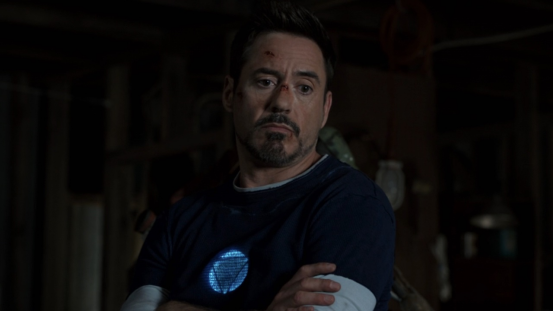
The Indie Spirit: Shooting Iron Man Before the MCU Boom
Long before the Marvel Cinematic Universe (MCU) became a multi-billion-dollar global juggernaut, the production of the original 2008 Iron Man felt more like an expensive independent film than a foundational franchise blockbuster. Robert Downey Jr. has frequently reflected on this era, noting that the lack of studio oversight and massive expectations allowed for a highly creative, almost experimental filmmaking process. During this period, Marvel Studios was an unproven entity, gambling its remaining character rights on a B-list comic book hero and a leading man who was considered a massive Hollywood risk.
The Absence of the “Marvel Formula”
At the time of filming, the now-famous “Marvel Formula”—a meticulously planned interconnected web of post-credit scenes, overarching cosmic villains, and standardized tonal humor—did not exist. Director Jon Favreau and Robert Downey Jr. were essentially flying blind, relying on their instincts to ground a fantastical story in gritty realism. This lack of a rigid corporate blueprint afforded the cast and crew unprecedented creative freedom.
- Creative Autonomy: Without a pre-existing cinematic universe to adhere to, filmmakers could focus entirely on character development rather than franchise world-building.
- High-Stakes Gambling: Marvel secured the funding for the film by leveraging the film rights to their remaining characters. Failure would have meant losing the rights to Captain America, Thor, and others.
- Organic Tonal Shifts: The film seamlessly transitioned between harrowing scenes of captivity in an Afghan cave to witty, high-society banter, establishing a tone that future MCU films would strive to replicate.
Because the studio was essentially building the airplane while flying it, the daily shoot was characterized by spontaneous rewrites and collaborative problem-solving. This environment was crucial for Downey, whose background in character-driven drama and improvisational acting perfectly aligned with the chaotic but fertile production landscape.

Forging Chemistry: Paltrow and Downey Behind the Scenes
The beating heart of the Iron Man franchise has always been the dynamic between Tony Stark and Virginia “Pepper” Potts. The behind-the-scenes story of Gwyneth Paltrow and Robert Downey Jr. is one of mutual respect, rapid-fire intellect, and an organic camaraderie that elevated the script far beyond its comic book origins. Their on-screen chemistry was not manufactured in an editing bay; it was forged through hours of unscripted banter and a shared commitment to making their relationship feel lived-in and authentic.
The Evolution of Pepper Potts
Initially, the role of the superhero’s love interest was often relegated to the background—a damsel in distress waiting to be rescued. However, Paltrow and Downey actively pushed back against this trope. They worked tirelessly to ensure Pepper Potts was Tony Stark’s intellectual equal, his moral compass, and the only person capable of cutting through his narcissistic defenses.
To understand the depth of their collaboration, one must look at their specific working methods on set. The actors would frequently retreat to Downey’s trailer to dissect scenes, stripping away clichéd dialogue and replacing it with overlapping, naturalistic speech patterns reminiscent of classic 1940s screwball comedies.
| Character Dynamic | Traditional Superhero Trope | The Downey-Paltrow Approach |
|---|---|---|
| Dialogue Style | Expository, turn-based dialogue. | Overlapping, rapid-fire, improvisational banter. |
| Power Balance | Hero dominates; love interest supports. | Equal footing; Pepper manages Tony’s chaos. |
| Emotional Core | Surface-level romance. | Deep-rooted trust, frustration, and unspoken affection. |
This collaborative environment required a massive amount of trust. Paltrow has spoken at length about how Downey’s unpredictable acting style kept her on her toes, forcing her to react genuinely rather than simply reciting memorized lines. This raw, unfiltered interaction resulted in some of the most memorable scenes in the MCU, including the iconic “proof that Tony Stark has a heart” arc reactor replacement sequence.

The Improvised Magic That Defined Tony Stark
It is a well-documented piece of Hollywood lore that Iron Man began filming without a completed script. While this would typically spell disaster for a tentpole action movie, for Jon Favreau, Robert Downey Jr., and co-star Jeff Bridges, it became a catalyst for cinematic magic. The daily process of rewriting scenes on the fly allowed Downey to inject his own unique cadence, wit, and vulnerability into Tony Stark, effectively blurring the lines between the actor and the character.
The “Student Film” Methodology
Jeff Bridges famously referred to the production as a “$200 million student film.” The core creative team would gather in the morning, look at the storyboards, and essentially brainstorm the dialogue for the day’s shoot. This high-wire act of filmmaking demanded that the actors fully inhabit their characters, as they could not rely on a safety net of pre-approved text.
- Scene Deconstruction: The team would break down the narrative goal of a scene and improvise their way to the conclusion, ensuring the emotional beats felt earned.
- Downey’s Influence: Downey brought a manic, restless energy to Tony Stark, utilizing props and physical space in ways that were never scripted, making the billionaire genius feel brilliantly erratic.
- Favreau’s Direction: Jon Favreau acted as the ultimate conductor, capturing the spontaneous lightning in a bottle while ensuring the overarching narrative remained cohesive and visually spectacular.
The ultimate culmination of this improvisational spirit is the final line of the movie: “I am Iron Man.” This line, spontaneously delivered by Downey, broke the cardinal rule of superhero secret identities and fundamentally altered the trajectory of the entire Marvel Cinematic Universe, proving that trusting the actor’s instincts was the studio’s greatest asset.

Iron Man and Robert Downey Jr.: An Inseparable DNA
The casting of Robert Downey Jr. as Tony Stark is widely considered the greatest casting decision in the history of comic book cinema. But beyond the box office success, the role represented a profound, almost spiritual mirroring of the actor’s own life. Tony Stark’s journey from a reckless, self-destructive arms dealer to a self-sacrificing savior closely paralleled Downey’s highly publicized personal redemption story. Over the course of eleven years and ten film appearances, the character and the actor became inextricably linked, sharing a unified DNA.
Art Imitating Life: The Redemption Arc
When Downey was cast, he was still viewed as a Hollywood pariah by many studio executives due to his past struggles with addiction and the law. Director Jon Favreau had to fight tooth and nail to convince Marvel that Downey’s real-life experiences would lend an irreplaceable gravity to Stark’s character arc. Favreau understood that Downey didn’t just understand Tony Stark’s flaws; he had lived them.
This deep psychological connection allowed Downey to portray Stark’s PTSD in Iron Man 3, his authoritarian guilt in Captain America: Civil War, and his ultimate paternal sacrifice in Avengers: Endgame with a devastating authenticity. The character evolved alongside the actor, transitioning from a lone wolf to a mentor, and finally, to a father.
The Cultural Impact of the Downey-Stark Persona
The fusion of Downey and Stark created a cultural icon that transcended traditional cinema. Downey’s real-life media appearances, philanthropic efforts, and public persona began to seamlessly blend with the charismatic swagger of Tony Stark. He became the undisputed godfather of the MCU, setting the professional standard for every actor who subsequently joined the franchise.
- The Anchor of the Avengers: Downey’s grounded, humanistic portrayal provided the emotional anchor necessary for audiences to accept the more fantastical elements of the MCU, such as Norse gods and talking raccoons.
- A Legacy of Sacrifice: The culmination of Stark’s journey in Endgame resonated globally because audiences weren’t just saying goodbye to a character; they were honoring a decade-long journey of an actor who had reclaimed his life and career on the world stage.
The Lasting Legacy of the Original Marvel Blueprint
Looking back at the genesis of the MCU, the original Iron Man stands as a testament to the power of character-driven storytelling, risk-taking, and collaborative filmmaking. The alchemy of Robert Downey Jr.’s irrepressible talent, Gwyneth Paltrow’s grounding presence, and Jon Favreau’s visionary direction created a blueprint that Hollywood has spent over a decade trying to replicate.
Setting the Gold Standard for Blockbusters
The success of the 2008 film proved that superhero movies did not have to be brooding and cynical, nor did they have to be campy and childish. They could be smart, politically resonant, emotionally complex, and endlessly entertaining. The legacy of Downey’s time in the armor is not just the billions of dollars earned at the box office, but the fundamental elevation of the comic book genre into a respected pillar of modern cinematic mythology.
As the MCU continues to expand into the multiverse and beyond, the foundational DNA injected by Robert Downey Jr. remains the gold standard. Every quip, every moment of technological wonder, and every heroic sacrifice in modern superhero cinema owes a debt to the indie-spirited, improvised, and deeply human film that started it all.
Frequently Asked Questions (FAQ)
- Q1: Why was Robert Downey Jr. considered a risk for the role of Iron Man?
- Prior to his casting in 2008, Robert Downey Jr. had a well-documented history of substance abuse and legal troubles. Many Hollywood studios considered him uninsurable and a massive liability for a big-budget franchise. Director Jon Favreau had to heavily lobby Marvel executives, arguing that Downey’s personal redemption story perfectly mirrored Tony Stark’s character arc.
- Q2: Is it true that the first Iron Man movie was filmed without a finished script?
- Yes, the production began with an incomplete script. The filmmakers had a solid outline and storyboards for the action sequences, but much of the dialogue was written or improvised on the day of shooting. Robert Downey Jr., Gwyneth Paltrow, and Jeff Bridges frequently collaborated with Jon Favreau to craft their scenes organically on set.
- Q3: How did Gwyneth Paltrow influence the character of Pepper Potts?
- Gwyneth Paltrow actively worked with Downey to ensure Pepper Potts was not a traditional “damsel in distress.” They developed a rapid-fire, screwball-comedy style of banter that established Pepper as Tony Stark’s intellectual equal and the essential grounding force in his chaotic life.
- Q4: What does Jeff Bridges mean when he called Iron Man a “$200 million student film”?
- Jeff Bridges used this phrase to describe the highly collaborative, improvised, and slightly chaotic nature of the production. Despite the massive budget, the lack of studio interference and the fly-by-the-seat-of-their-pants filmmaking style reminded him of the creative freedom typically only found in independent or student filmmaking.
- Q5: How did the ending of Iron Man change the future of the MCU?
- At the end of the film, Tony Stark declares, “I am Iron Man,” a line improvised by Robert Downey Jr. This decision to abandon the traditional superhero “secret identity” trope set a precedent for the entire Marvel Cinematic Universe, establishing a world where heroes operate publicly and deal with the real-world consequences of their actions.