
The character of Superman has long transcended the boundaries of the four-color comic book page, evolving into a complex vessel for philosophical inquiry and mythological deconstruction. To understand Superman is to balance two seemingly contradictory states: his existence as a fallible moral agent and his inevitable ascension to the status of a secular deity. This pillar page examines the profound narrative arcs that define these states—specifically focusing on the psychological “Red Experiment” and the visual “Art of God-making” found in the seminal All-Star Superman. By analyzing how power interacts with ideology and how visual metaphors like the Kryptonian Immortal Flower signify immortality, we gain a comprehensive view of the Man of Steel’s true nature.
The Red Experiment: Deconstructing Superman’s Moral Compass
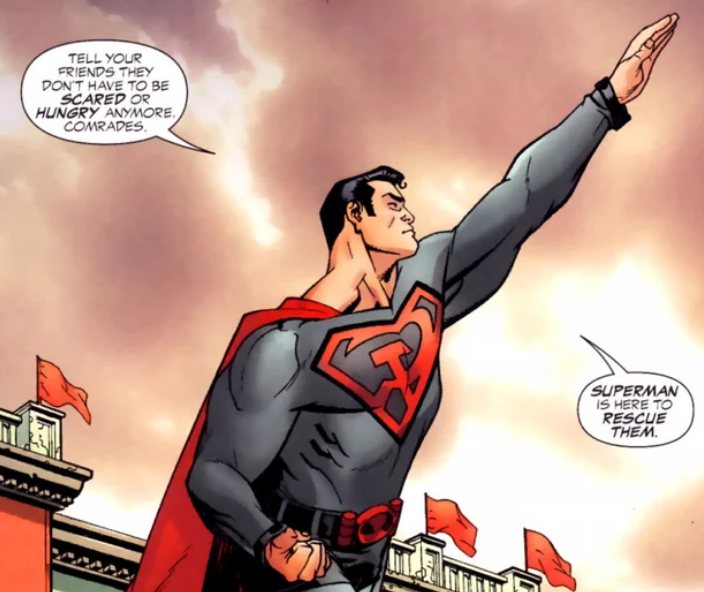
The “Red Experiment” represents a pivotal moment in Superman’s narrative history, serving as a laboratory for testing the limits of a hero’s psyche. Unlike Green Kryptonite, which targets the physical body, Red Kryptonite often acts as a catalyst for psychological shifts, stripping away inhibitions or forcing the hero to confront his own ideological foundations. This experiment is not merely a plot device; it is a deep-dive into the moral dilemmas inherent in wielding absolute power within a world of fragile mortals.
The Mechanics of the Red Kryptonite Trial
In the context of the Red Experiment, the exposure to mutated minerals serves as a “stress test” for Superman’s altruism. When his standard moral framework is altered, the narrative asks a fundamental question: Is Clark Kent’s goodness a result of his nature, or is it a fragile construct that collapses under chemical or psychological pressure? The experiment highlights the ideological fragility that exists even in the strongest being on Earth. Key aspects of this trial include:
- Loss of Inhibition: Red Kryptonite often removes the social and ethical filters that prevent Superman from imposing his will on humanity.
- The Burden of Choice: Every action taken during the experiment forces Superman to weigh the “greater good” against individual liberty.
- Psychological Scars: The aftermath of the experiment often leaves the hero questioning his own stability and his right to lead.
Ideological Conflict and the Weight of Choice
The moral dilemma at the heart of the Red Experiment is the conflict between individual agency and paternalistic protection. If Superman has the power to fix every global problem, does his refusal to do so make him complicit in human suffering? Conversely, if he does intervene, does he become a tyrant? This ideological tug-of-war is the core of his internal struggle. The experiment proves that Superman’s greatest challenge is not a physical villain, but the constant negotiation of his own influence over the human race.

The Art of God-Making: Visual Metaphors in All-Star Superman
While the Red Experiment explores the hero’s internal struggles, All-Star Superman, particularly Episode 10, shifts the focus toward his external transformation into a legend. Grant Morrison’s work is often described as the “Art of God-making,” a process where the character is stripped of mundane concerns and elevated through high-concept visual metaphors. This narrative transition marks the shift from Superman as a “super-man” to Superman as a cosmic archetype.
The Kryptonian Immortal Flower as a Symbol of Ascension
One of the most potent symbols in this arc is the Kryptonian Immortal Flower. This visual metaphor serves as a bridge between the biological reality of Krypton and the spiritual legacy of Kal-El. The flower represents a life form that thrives in the presence of extreme energy, much like Superman himself. Its bloom is not just a biological event but a signifier of the hero’s transition into a state of permanent, legendary existence. The flower encapsulates the themes of beauty, endurance, and the cyclical nature of life and death in the superhero genre.
Grant Morrison’s Divine Narrative Structure
Morrison utilizes a specific narrative structure to achieve the “God-making” effect. By presenting Superman with twelve “labors”—reminiscent of the trials of Hercules—the story positions him within the tradition of ancient myth. This structure serves several purposes:
- Archetypal Resonance: It connects modern superheroics to thousands of years of human storytelling.
- Finality: It treats Superman’s life as a complete, perfect work of art rather than an endless series of monthly adventures.
- Transcendence: It emphasizes that while the man may die, the ideal of Superman is immortal.

Bridging Mortality and Immortality: The Philosophical Synthesis
The synthesis of the Red Experiment’s psychological depth and All-Star Superman’s divine symbolism creates a holistic view of the character. We see a figure who is simultaneously burdened by the human experience of choice and liberated by the cosmic reality of his power. This duality is what makes Superman a compelling subject for both philosophical and artistic study. He is the “immortal” who understands the value of a single “mortal” heartbeat.
The Human Element within the Kryptonian God
Despite the “God-making” process, Superman’s humanity remains his most vital component. His upbringing by the Kents provides the moral bedrock that prevents the Red Experiment from turning into a tragedy. The Kryptonian Immortal Flower may represent his heritage and his destiny, but it is his human empathy that gives that destiny meaning. Without the human element, the god would be a cold, distant entity; with it, he becomes a beacon of hope.
Data Comparison: Narrative Themes and Impact
To better understand the differences between these two narrative approaches, we can compare their core thematic elements:
| Feature | The Red Experiment (Psychological Trial) | All-Star Superman (The Art of God-making) |
|---|---|---|
| Core Conflict | Internal Morality vs. Ideology | Mortality vs. Mythological Legacy |
| Key Catalyst | Red Kryptonite / Psychological Stress | Solar Radiation / The Twelve Labors |
| Visual Motif | Shadows, Distorted Reality | The Kryptonian Immortal Flower, Radiant Light |
| End Result | Ethical Growth / Cautionary Realization | Ascension / Apotheosis |

Comparative Analysis of Narrative Techniques
The techniques used to convey these stories are as different as their themes. The Red Experiment often relies on noir-inspired storytelling and psychological suspense to highlight the danger of a hero losing his way. In contrast, the “Art of God-making” utilizes surrealism and grand visual metaphors to portray a hero who is finding his ultimate purpose. These techniques ensure that the reader feels the weight of the moral dilemma in one instance and the awe of the divine in the other.
Visual Storytelling vs. Psychological Dilemma
In the Red Experiment, the art often reflects the fractured state of Superman’s mind. Use of jagged lines and darker palettes emphasizes the moral dilemma. However, in the All-Star Superman arc, the art is clean, bright, and expansive. The Kryptonian Immortal Flower is rendered with a delicate precision that suggests a higher order of existence. This visual shift is essential for moving the audience from a state of worry for the hero’s soul to a state of reverence for his legacy.
Frequently Asked Questions (FAQ)
- Q1: What exactly is the “Red Experiment” in Superman lore?
- The Red Experiment refers to narrative arcs where Superman is exposed to Red Kryptonite or other psychological stressors to test his moral and ideological boundaries. It serves to explore the “what if” scenarios regarding his absolute power and how he maintains his humanity under extreme psychological pressure.
- Q2: How does the Kryptonian Immortal Flower function as a metaphor?
- The flower symbolizes the enduring and transcendent nature of Superman’s Kryptonian heritage. It represents a beauty that survives extreme conditions, mirroring Superman’s own journey from a doomed planet to becoming an immortal symbol of hope on Earth.
- Q3: What does the term “Art of God-making” mean in comic book criticism?
- Coined in the context of Grant Morrison’s writing, it refers to the deliberate narrative and visual elevation of a superhero to the level of a mythological deity. It involves using archetypal storytelling, symbolic imagery, and a sense of finality to define the character as a timeless legend.
- Q4: Why is the moral dilemma of Superman still relevant today?
- Superman’s struggle with power and ideology reflects modern societal concerns about the use of force, the responsibility of those in power, and the ethical implications of intervention. He serves as a mirror for our own debates on leadership and morality.
- Q5: Does All-Star Superman suggest that Superman is literally a god?
- While the story uses “God-making” techniques, it emphasizes that Superman’s “divinity” comes from his moral perfection and the inspiration he provides to humanity, rather than just his physical powers. He is a god of the spirit and the imagination.