
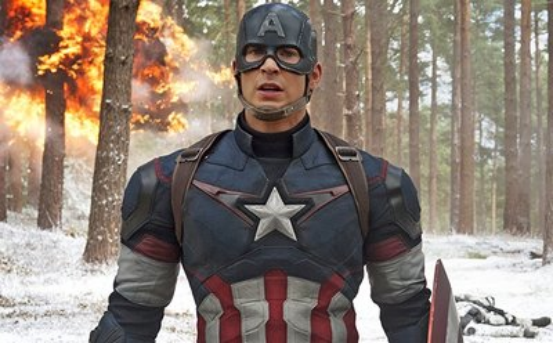
In the vast expanse of the Marvel Cinematic Universe, Captain America, Steve Rogers’ shield stands as the most prominent symbol. It was once the tangible representation of the “American Dream” during World War II, a symbol of discipline for S.H.I.E.L.D. agents, and, in “Captain America: Civil War,” it became the moral spear that tore the Avengers apart. However, when we look closely at this shield forged from vibranium, we can see that its reflective surface mirrors a hero’s spiritual transformation over the course of 70 years. From the perfect soldier depicted in government brochures to the rebel who refused to sign at the United Nations building, Steve spent half his life proving that the true definition of a hero is not inscribed in the metallic sheen of the shield, but rather in those moments when one must say “no,” and in the unwavering grip on the shield, even when facing isolation and adversity.
When the Hero Becomes a Cog in the National Machine
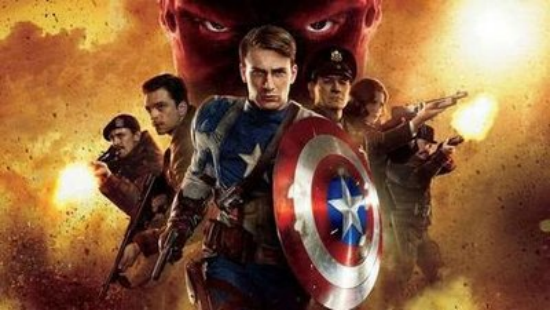
In 1943, Steve Rogers was a meticulously crafted war icon. This 5-foot-4-inch-tall young man from Brooklyn became a paragon of physical and moral perfection after receiving the Super Soldier Serum. He would leap onto a “grenade” (even though it was just a rubber prop) to protect his comrades he barely knew, and he’d smile and shout, “I can do this all day!” in recruitment ads. Even the star – spangled pattern on his shield was a visual symbol designed by the military to maximize propaganda efforts. At this time, Captain America was the most dazzling cog in the war machine. His standard of justice was derived from military orders, and his heroic deeds were precisely defined as “eliminating Axis enemies.” Even his first love, Peggy Carter, was an agent sent by the Strategic Scientific Reserve (SSR) to monitor and cooperate with him.
When Absolute Justice Encounters the Complexities of Reality
In 2011, Steve woke up in a S.H.I.E.L.D. medical pod to a world that was nothing like the one he remembered. Peggy had become an elderly woman, trembling as she injected insulin, and his former comrades had become museum exhibits. Even the “justice” he held dear was now enshrouded in layers of bureaucracy. In “Captain America: The Winter Soldier,” when he discovered that S.H.I.E.L.D. had been infiltrated by Hydra and witnessed the “Insight Project” using big data to predict and eliminate potential enemies, the soldier who had fought for “freedom” in World War II raised his shield not against external enemies, but to block the Helicarriers equipped with a global surveillance system.
When the Shield Becomes a Monument of Conscience
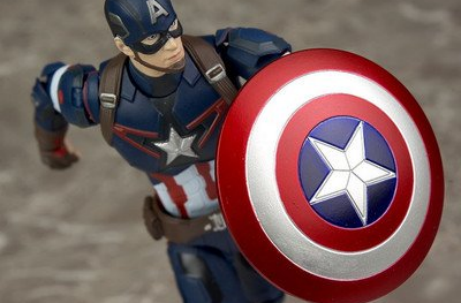
The airport battle in “Captain America: Civil War” was the most intense internal struggle of Steve Rogers’ heroic philosophy. In the face of the Sokovia Accords, Tony Stark, Iron Man, chose to submit to world order, saying, “We need to be regulated because we’ve destroyed entire cities.” Steve’s retort was as weighty as vibranium: “If we hand over our power to others, what do we do when they decide to harm the innocent?” He wasn’t opposed to responsibility; rather, he refused to simplify responsibility into blind obedience to an institution. After the Hydra incident, he was more aware than anyone that the justice of institutions needed to be constantly scrutinized, and the mission of a hero was to protect “people,” not just “symbols.”
When the Shield Ceases to Be a Weapon and Becomes a Torch of Inheritance
At the end of “Avengers: Endgame,” Steve made a choice that required more courage than any battle. He took the shield back to 1943, held Peggy’s hand on the dance floor, and spent a lifetime fulfilling a long – overdue date. This heartwarming “retirement” might seem like a departure from his heroic mission, but it was actually the ultimate sublimation of the definition of a hero. When he passed the shield to Sam Wilson, the black veteran who had run with him on the streets and fought by his side in battles, Steve finally shattered the symbolic shackles of “Captain America” as a white male hero.