
The history of the DC Universe is not a straight line but a complex tapestry of intersecting timelines, parallel earths, and cosmic resets. For decades, DC Comics has utilized the concept of a “Crisis” to manage its sprawling continuity, often resulting in massive editorial shifts that impact every character from Superman to the Flash. Understanding these events is essential for any reader looking to grasp the current state of DC lore and the mechanisms of its storytelling.
Crisis on Infinite Earths: The Foundation of the Reboot Era
The 1985 event Crisis on Infinite Earths (COIE) stands as the most significant milestone in comic book history. Before COIE, the DC Universe was a cluttered “Multiverse” where different versions of heroes existed on Earth-1, Earth-2, Earth-S, and beyond. This led to significant confusion regarding which stories were “canon” and which were relegated to alternate realities.
The Anti-Monitor and the Death of the Multiverse
The core conflict of COIE involved the Anti-Monitor, a cosmic entity seeking to consume all positive-matter universes. To stop him, heroes from across time and space were forced to unite, leading to the ultimate sacrifice of iconic characters like Barry Allen (The Flash) and Kara Zor-El (Supergirl). The result was the collapse of the Multiverse into a single, unified Earth, streamlining decades of history into a cohesive narrative timeline.
The Lasting Legacy of the 1985 Reboot
The “Post-Crisis” era defined the DC Universe for the next twenty years. It allowed creators to modernize origins, such as Frank Miller’s Batman: Year One and George Pérez’s Wonder Woman. However, while COIE solved the problem of the Multiverse, it inadvertently created new continuity “glitches” that subsequent crises would attempt to fix.

Zero Hour: Mending the Fractures of Time and the Flash’s Choice
By 1994, the single timeline created by COIE was beginning to show cracks. Zero Hour: A Crisis in Time was designed to address these inconsistencies, specifically focusing on the “lost” years of certain characters and the nature of time itself. The primary antagonist was Hal Jordan, who had fallen from grace and become the villain Parallax after the destruction of Coast City.
Hal Jordan’s Descent and the Time Paradox
Hal Jordan sought to rewrite reality to bring back his home and “fix” the tragedies of the past. This introduced a profound time paradox, as the heroes had to fight against one of their own to prevent the erasure of the current timeline. The Flash once again played a pivotal role, navigating the Speed Force to stabilize the temporal rifts that threatened to consume the present.
The Forgotten Consequences of the Zero Hour Incident
While Zero Hour is often overshadowed by other crises, its impact was vital for the 1990s. It introduced the concept of Hypertime and allowed for minor adjustments to the timeline without a full-scale reboot. It reinforced the idea that the Flash is the “anchor” of the DC timeline, a theme that would return with even greater weight during the Flashpoint event.

Identity Crisis: The Erosion of Heroic Trust and Moral Ambiguity
Unlike the cosmic battles of the past, Identity Crisis (2004) was a deeply personal, psychological thriller that shook the foundations of the Justice League. It shifted the focus from external threats to internal corruption, specifically the “trust system” that held the hero community together.
The Mind-Wipe Controversy
The story revealed that several members of the Justice League, including Zatanna, Green Lantern, and Hawkman, had been secretly mind-wiping villains—and even Batman—to protect their secret identities and maintain order. This revelation shattered the moral high ground of the heroes. The trust that Batman had in his colleagues was permanently damaged, leading him to create the Brother Eye satellite, which would later become a major threat in Infinite Crisis.
Impact on the Trust System of DC Heroes
- Loss of Innocence: The heroes were no longer seen as infallible paragons of virtue.
- Inter-League Conflict: The rift between the “Big Three” (Superman, Batman, Wonder Woman) became a central theme of the mid-2000s.
- The Death of Sue Dibny: A catalyst that forced the community to confront the vulnerability of their loved ones.

Infinite Crisis: The Return of the Golden Age and the Darkening of Hope
Infinite Crisis (2005-2006) served as a direct sequel to the original 1985 Crisis. It brought back the survivors of the first Crisis—Earth-2 Superman (Kal-L), Earth-Prime Superboy (Superboy-Prime), and Alexander Luthor Jr.—who had been watching the DC Universe from a “paradise dimension.”
The Darkening of Golden Age Superman
Kal-L, the original Superman of the 1930s, returned to find a world he believed had become too dark and cynical. His attempt to replace the current Earth with Earth-2 was a meta-commentary on the evolution of comic books. However, his noble intentions were manipulated by Alexander Luthor, leading to a tragic conflict where the “hope” of the Golden Age was pitted against the “reality” of the Modern Age.
The Rise of Superboy-Prime
Superboy-Prime’s transformation into a petulant, omnipotent villain remains one of the most controversial aspects of the event. His “retcon punches”—literally hitting the walls of reality to change history—explained various continuity errors in a way that felt both terrifying and absurd to the characters within the story.

Final Crisis: The Ultimate Victory of Evil and the Mystery of the Mobius Chair
Written by Grant Morrison, Final Crisis (2008) was described as “the day evil won.” Darkseid finally discovered the Anti-Life Equation, allowing him to enslave the minds of almost everyone on Earth. It was a psychedelic, high-concept epic that pushed the boundaries of what a “Crisis” could be.
Darkseid’s Fall and the Mobius Chair
The story involves Darkseid “falling” through reality, dragging the universe down with him into a singularity. A key element in navigating this madness was the Mobius Chair, the throne of Metron. The chair is a repository of all knowledge in the universe, and its mystery is central to understanding how the heroes eventually tracked the source of the cosmic decay. The chair’s role in Final Crisis foreshadowed its importance in later events like The Darkseid War.
The “Death” of Batman
Final Crisis is perhaps most famous for the apparent death of Bruce Wayne at the hands of Darkseid’s Omega Sanction. In reality, Batman was sent back in time, forcing the rest of the DC Universe to cope with a world without its greatest detective, leading to the Battle for the Cowl and Dick Grayson taking up the mantle.

Blackest Night: Resurrection, Foreshadowing, and the Dead Rising
While not a “Crisis” in name, Blackest Night (2009-2010) functioned as a massive continuity event that dealt with the literal and metaphorical “ghosts” of DC’s past. The dead rose as Black Lanterns, fueled by the entity Nekron, to extinguish all life and emotion in the universe.
Neglected Resurrection Foreshadowings
Throughout the years leading up to Blackest Night, DC writers dropped subtle “Easter eggs” regarding which characters would return. The resurrection of the Flash and Green Lantern earlier in the decade were the first signs of the emotional spectrum’s imbalance. The event served as a “cleanup” for DC’s afterlife, deciding once and for all which heroes belonged in the land of the living.
The Emotional Spectrum and the White Lantern
The event expanded the Green Lantern mythos into a full spectrum of colors, each representing a different emotion. The climax saw the birth of the White Lantern Corps, representing life itself, which successfully resurrected twelve key heroes and villains, setting the stage for the Brightest Day initiative.

Flashpoint: The Butterfly Effect and the Birth of the New 52
In 2011, Barry Allen’s decision to travel back in time and save his mother, Nora Allen, from being murdered caused a butterfly effect that shattered the timeline. This was not a simple change; it was a temporal boom that rippled across history, creating the Flashpoint universe.
The 48 Hours Before the New 52
In the Flashpoint world, Thomas Wayne is Batman, Superman is a government captive, and Wonder Woman and Aquaman are engaged in a world-ending war. Barry Allen’s attempt to fix his mistake resulted in the merging of three separate timelines—DC, Vertigo, and Wildstorm—to create the New 52. This was a “hard reboot,” wiping away much of the post-1985 history in favor of a younger, more modern universe.
The Legacy of the Flash’s Choice
| Aspect | Pre-Flashpoint | Post-Flashpoint (New 52) |
|---|---|---|
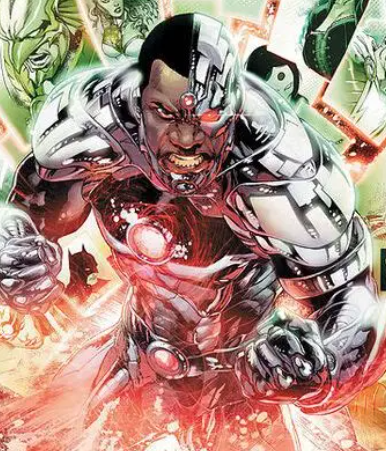
| Justice League | Founding members included Martian Manhunter. | Founding members included Cyborg; younger versions. |
| Superman | Married to Lois Lane; classic costume. | Single; armor-like suit; relationship with Wonder Woman. |
| The Multiverse | Slowly returning after Infinite Crisis. | Strictly defined “52” universes. |

The Legacy of the Crisis: How Reboots Shape Modern Storytelling
The “Crisis” cycle has become a fundamental part of the DC brand. While some critics argue that frequent reboots make the lore inaccessible, these events serve a vital purpose: they allow the universe to breathe and evolve. They provide a mechanism for creators to keep decades-old characters relevant to new generations of readers.
The Starting Point and Legacy of the DC Universe Reboot
Every reboot, from COIE to Flashpoint, leaves a “legacy.” The New 52 eventually gave way to DC Rebirth, which attempted to bring back the “heart” and “hope” that was lost during the Flashpoint transition. This ongoing dialogue between the past and the present is what makes the DC Universe a living, breathing mythology.
Frequently Asked Questions (FAQ)
- Q1: What is the difference between a “Crisis” and a regular crossover event?
- A “Crisis” in DC terms usually involves a fundamental change to the Multiverse or the timeline. While a regular crossover might feature a big villain, a Crisis often results in characters being erased, origins being rewritten, or the entire universe being rebooted.
- Q2: Why does the Flash always seem to be at the center of these events?
- The Flash (specifically Barry Allen) is connected to the Speed Force, which allows him to move through time and between dimensions. This makes him the natural “narrative engine” for stories involving time paradoxes and reality shifts.
- Q3: Is the “New 52” still the current continuity?
- Not entirely. Following the DC Rebirth and Infinite Frontier events, much of the Pre-Flashpoint history has been restored or merged with the New 52 elements, creating a “best of both worlds” approach to current canon.
- Q4: What was the “Butterfly Effect” in Flashpoint?
- The butterfly effect refers to how a small change in the past (saving Nora Allen) caused massive, unpredictable changes across the entire timeline, such as Bruce Wayne dying instead of his parents and the Amazon-Atlantean war.
- Q5: What is the Mobius Chair’s significance?
- The Mobius Chair is a cosmic artifact that provides its user with total knowledge. In crises, it is often used to find the “truth” behind reality-warping events or to identify the true nature of cosmic threats like Darkseid or the Anti-Monitor.