
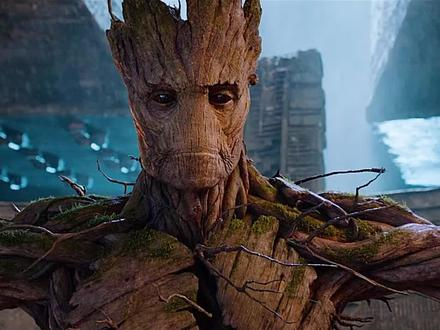
The Origins and Evolution of Groot
Long before he became a household name in the Marvel Cinematic Universe (MCU), Groot had a fascinating and obscure history in comic book lore. The character’s journey from a terrifying extraterrestrial monster to a beloved, merchandising powerhouse is a testament to the creative evolution within Marvel Comics. Understanding “I Am Groot” requires looking back at the character’s genesis and the underlying principles of his design.
From Comic Book Monster to MCU Hero
Groot first appeared in “Tales to Astonish” #13 in 1960, created by Stan Lee, Larry Lieber, and Jack Kirby. Originally, he was an invading alien from Planet X who came to Earth to capture humans for experimentation. Unlike his modern counterpart, this early version of Groot spoke in full, highly articulate sentences. It wasn’t until the 2006 crossover event “Annihilation: Conquest” that Groot was reintroduced into mainstream Marvel continuity, eventually joining the modern iteration of the Guardians of the Galaxy.
The Linguistic Genius of “I Am Groot”
The transformation of Groot’s vocabulary is one of the most brilliant narrative shifts in comic history. The restriction to the phrase “I Am Groot” is not a sign of low intelligence, but rather a physiological condition. According to Marvel lore, the vocal organs of a Flora colossus are stiff and inflexible, causing any phrase they attempt to speak to sound identical to “I Am Groot.” The true meaning is conveyed through subtle micro-expressions, sighs, and the specific inflection of the syllables.

Decoding the Flora Colossus: Biology and Abilities
To truly appreciate Groot, one must understand the unique biology of the Flora colossus species. Originating from the capital world of the branch worlds, Planet X, Groot’s physiology is entirely plant-based, granting him an array of extraordinary abilities that make him the ultimate defensive and offensive asset to the Guardians of the Galaxy.
Cellular Regeneration and Growth
The core principle behind Groot’s biology is extreme cellular regeneration. He can absorb wood as food, rebuild his entire body from a single surviving sprig, and manipulate his physical form to create weapons, shields, and even bioluminescent spores. This regenerative capability is the reason we see multiple iterations of Groot throughout the MCU.
| Groot Iteration | Physical Characteristics & Key Abilities |
|---|---|
| Adult Groot (Vol. 1) | Towering stature, immense physical strength, capable of creating massive protective domes and extending limbs for combat. |
| Baby Groot (Vol. 2) | Small, highly agile, prone to emotional outbursts, fits into tight spaces for sabotage and retrieval missions. |
| Teen Groot (Infinity War) | Lanky, highly durable, capable of creating complex structures (e.g., the handle for Thor’s Stormbreaker axe). |
| Alpha/Swole Groot (Vol. 3) | Massive, bulky frame, heavily armored bark, capable of storing weapons within his body structure. |
The “I Am Groot” Disney+ Animated Shorts Series
Capitalizing on the immense popularity of the character, Marvel Studios released “I Am Groot,” a series of photorealistic animated shorts on Disney+. Directed by Kirsten Lepore, these shorts dive into the untold, mischievous adventures of Baby Groot as he grows up among the stars.
Exploring Baby Groot’s Solo Adventures
The series operates as a micro-exploration of the Marvel universe from the perspective of a toddler. Rather than focusing on galaxy-ending threats, the narrative scales down to focus on sensory experiences, curiosity, and the simple, comedic struggles of a sentient plant creature interacting with strange alien flora and fauna. It adds a layer of emotional depth and lighthearted world-building to the overarching MCU.
Expert Advice: How to Understand Groot
While Rocket Raccoon seems to have a natural translation matrix for Groot’s language, MCU fans can also learn to decipher the underlying meaning of his catchphrase. Here is a technical checklist for interpreting Groot’s dialogue:
- Analyze the Pitch: A higher pitch usually denotes confusion, curiosity, or fear, whereas a deep, resonant pitch indicates confidence or aggression.
- Watch the Body Language: Groot’s physical posture does 80% of the communicating. Drooping branches signify sadness, while flared bark indicates a defensive posture.
- Observe Context Clues: The immediate environment and the reactions of the people around him provide the necessary context to translate his three signature words.
Frequently Asked Questions (FAQ)
- Why can Groot only say “I Am Groot”?
- Due to the hardened nature of his species’ larynx and vocal cords, the acoustic output of a Flora colossus is restricted. While they are thinking highly complex thoughts, the physical sound that escapes their wooden vocal tract always sounds like “I Am Groot.”
- Is Baby Groot the same person as the original Adult Groot?
- No. Director James Gunn has confirmed that the original Adult Groot died in the first Guardians of the Galaxy film. Baby Groot is essentially his offspring or a clone grown from his cutting, possessing a completely different personality and no memories of the original Groot.
- What does the phrase “We Are Groot” signify?
- Spoken at the climax of the first Guardians of the Galaxy film, this phrase represents a breakthrough in Groot’s communication. It signifies his evolution from an individualistic being to a selfless protector, acknowledging the team as his true family.
- Are the “I Am Groot” shorts considered MCU canon?
- Yes, the shorts are considered canon within the Marvel Cinematic Universe. They take place in the brief window of time between the end of Guardians of the Galaxy Vol. 2 and one of its post-credit scenes featuring Teen Groot.