
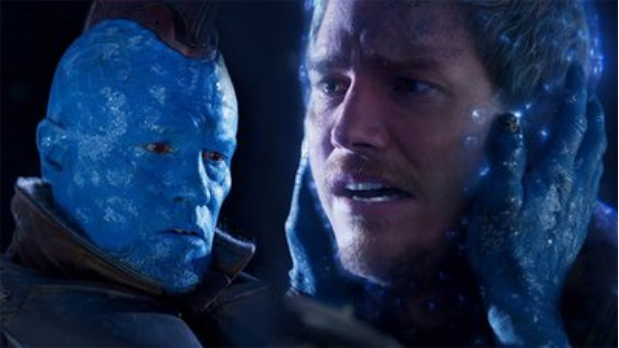
The Ravager Code vs. A Father’s Instinct
When analyzing the overarching narrative of the Marvel Cinematic Universe, few character arcs resonate as deeply as that of Yondu Udonta. Initially presented as a ruthless space pirate and the leader of a Ravager faction, Yondu’s true motivations are layered with profound emotional complexity. His relationship with Peter Quill, also known as Star-Lord, transcends the traditional boundaries of biological family, establishing a paradigm of adoptive fatherhood that is both tragic and beautiful. To understand the depth of Yondu’s silent love, we must first examine the strict environment in which he operated: the Ravager Code.
Understanding the Ravager Code
The Ravagers operate under a strict moral absolute: never deal in kids. Yondu’s decision to accept a contract from Ego the Living Planet to traffic his biological children was a direct violation of this code. However, the turning point in Yondu’s life was not the breaking of the code, but his subsequent redemption. Upon realizing the horrific fate that awaited Peter Quill—Ego was murdering his offspring who failed to manifest the Celestial light—Yondu made a conscious, career-destroying decision to keep the boy.
The Psychology of Protection
Yondu’s method of raising Peter was incredibly harsh, characterized by threats of being eaten by his crew. Yet, this brutal exterior was a necessary psychological shield. By projecting the image of a cruel captor, Yondu prevented his crew from mutinying and killing the human boy, while simultaneously hiding Peter from the omnipotent gaze of Ego. This duality is the cornerstone of Yondu’s silent love: sacrificing his own reputation and emotional connection with Peter to ensure the boy’s physical survival.

Ego The Living Planet: The Antithesis of Yondu
The central conflict of Guardians of the Galaxy Vol. 2 revolves around the dichotomy between Peter’s biological father, Ego, and his adoptive father, Yondu. This narrative brilliantly explores the “nature versus nurture” debate, ultimately concluding that genuine love is defined by sacrifice rather than genetics.
Nature vs. Nurture in the MCU
Ego represents the ultimate narcissistic parent. He views Peter not as an individual, but as an extension of his own grand design—a battery to fuel his universal Expansion. Ego’s love is conditional, predicated entirely on Peter’s ability to access Celestial power. In stark contrast, Yondu’s love is entirely unconditional. He loves Peter despite his human frailties, his rebellious nature, and his lack of cosmic utility.
| Attribute | Ego (Biological Father) | Yondu (Adoptive Father) |
|---|---|---|
| Core Motivation | Universal domination and self-replication. | Protection and survival of his crew and Peter. |
| View of Peter | A tool or battery for the Expansion. | A son to be protected at all costs. |
| Form of Love | Conditional and manipulative. | Unconditional, silent, and sacrificial. |
| Ultimate Act | Attempting to consume Peter’s life force. | Giving Peter the last aero-rig to save his life. |

The Arrow, The Fin, and The Whistle: Symbols of Discipline and Love
Yondu’s combat style is entirely unique, relying on a cybernetic fin and a Yaka Arrow controlled by high-octave whistling. Beyond its devastating effectiveness in battle, the Yaka Arrow serves as a profound metaphor for Yondu’s parenting style and his internal emotional state.
Mastering the Yaka Arrow
As Yondu famously tells Peter, he doesn’t control the arrow with his head; he controls it with his heart. This revelation is crucial. It dismantles the facade of the unfeeling pirate. The fact that Yondu wields the most heart-driven weapon in the galaxy proves that beneath his scarred, blue exterior lies a deeply emotional being.
Pro Tips: Analyzing MCU Character Symbolism
-
Look for Contradictions:
Characters who project apathy often have the most emotionally driven abilities (e.g., Yondu’s heart-controlled arrow). -
Examine the Scars:
Yondu’s Kree battle slavery scars explain his fear of authority and his desperate need to keep Peter free from a similar fate under Ego. -
Musical Cues:
Pay attention to the music playing during key scenes. Father and Son by Cat Stevens is the ultimate auditory representation of Yondu’s legacy.
The Ultimate Sacrifice: Deeper Than the Starry Sky
The climax of Yondu’s character arc is arguably the most emotionally devastating sequence in the Guardians of the Galaxy franchise. As Ego’s planet collapses, Yondu rescues Peter, flying him into the vacuum of space. With only one aero-rig and spacesuit remaining, Yondu makes the ultimate paternal choice without a second thought.
“He may have been your father, boy, but he wasn’t your daddy.”
This single line of dialogue encapsulates the entire thematic weight of the film. Yondu claims his rightful title as Peter’s true father. As he places the spacesuit on Peter, Yondu freezes in the vacuum of space. His silent love, previously hidden behind harsh words and Ravager bravado, is finally made visible. It is a love that is vast, quiet, and deeper than the starry sky that surrounds them.
Frequently Asked Questions (FAQ)
-
Why did Yondu keep Peter Quill instead of delivering him to Ego?
- Yondu discovered that Ego was killing all of his other children who failed to possess the Celestial gene. To protect Peter from certain death, Yondu broke the Ravager code and kept the boy, raising him as his own under the guise of using him for thievery.
-
What is the significance of the Yaka Arrow?
- The Yaka Arrow is a weapon forged from a rare metal found on Centauri-IV. It is significant because it is controlled by the user’s heart and emotions, not their mind, proving that Yondu is a deeply feeling and empathetic character despite his rough exterior.
-
Why was Yondu exiled from the Ravagers?
- Stakar Ogord (Starhawk) exiled Yondu because Yondu broke the most sacred rule of the Ravager Code: dealing in children. The greater Ravager community did not know Yondu kept Peter to save him; they only knew he took the child trafficking contract from Ego.
-
Did Yondu ever tell Peter that he loved him?
- Not in traditional words. Yondu’s love was “silent” and demonstrated through actions. His final words, declaring himself Peter’s “daddy,” and his sacrifice of the only spacesuit were his ultimate declarations of fatherly love.