
The Psychological Depths of Bruce Wayne
To understand the Batman phenomenon, one must first dissect the intricate psychological framework of Bruce Wayne. The tragedy in Crime Alley was not merely an inciting incident; it was a permanent psychological fracture that split his identity in two. Bruce Wayne, the billionaire playboy, is often argued to be the actual mask, while Batman represents his true, unfiltered self. This duality allows him to navigate the corrupt high society of Gotham by day while systematically dismantling its criminal underworld by night.
The Trauma Response and Sublimation
Unlike traditional heroes who are granted powers by accident or birthright, Batman is a product of severe childhood trauma. Instead of succumbing to despair, Bruce Wayne utilized a psychological defense mechanism known as sublimation. He channeled his immense grief and rage into a singular, obsessive crusade for justice. This requires an unparalleled level of mental fortitude and discipline, pushing the boundaries of human endurance.
- Obsessive Perfectionism: Bruce Wayne’s dedication to physical and mental perfection is driven by a subconscious need to control a chaotic world that took his parents from him.
- Emotional Isolation: To protect those he cares about, Batman frequently isolates himself, viewing emotional attachments as potential vulnerabilities that his enemies could exploit.
- The One Rule: The strict no-kill policy is not just a moral stance; it is the psychological barrier that prevents him from crossing the line into the very madness he fights against.
This psychological tightrope is a recurring theme in his existence. Every decision he makes is weighed against the shadow of his parents’ murder, ensuring that his crusade remains focused on justice rather than mere vengeance.

Gotham City: The Dark Heart of the Mythos
Gotham City is not merely a backdrop for Batman’s adventures; it is a living, breathing entity that actively shapes the narratives of both the hero and his adversaries. Characterized by its towering gothic architecture, perpetual gloom, and deeply ingrained systemic corruption, Gotham is an urban nightmare that necessitates the existence of a vigilante like Batman.
Architectural Oppression and Systemic Decay
The physical structure of Gotham is designed to be imposing. The gargoyles that adorn the skyscrapers serve as stone sentinels, mirroring Batman’s own watchful presence. The city’s layout, with its narrow alleys and sprawling industrial zones, provides the perfect hunting ground for both predators and the Dark Knight.
| Key Location | Significance in the Mythos | Psychological Impact |
|---|---|---|
| Arkham Asylum | The revolving door facility for Gotham’s criminally insane. | Represents the futility and cyclical nature of Batman’s war on crime. |
| Crime Alley | The site of the Wayne murders. | The geographical anchor of Bruce Wayne’s trauma and motivation. |
| Blackgate Penitentiary | Housing for sane but dangerous criminals. | Highlights the systemic failures of Gotham’s traditional justice system. |
| The Narrows | An impoverished, crime-ridden island district. | Showcases the socio-economic despair that breeds Gotham’s henchmen. |
The corruption in Gotham runs from the street-level thugs all the way to the mayor’s office and the police department. This pervasive rot means that Batman cannot simply fight crime; he must fight the very infrastructure of the city itself, making his mission an endless, Sisyphean task.

The Rogues Gallery: Mirrors of Madness
Batman’s enemies are widely considered the greatest in comic book history because they are not just physical threats; they are dark, psychological reflections of the Dark Knight himself. Each member of the rogues gallery represents a specific facet of Bruce Wayne’s own psyche, distorted and taken to extreme, villainous lengths.
Deconstructing the Villains
The villains of Gotham are often victims of their own tragic circumstances, mirroring Bruce Wayne’s tragic origins. However, where Bruce chose the path of order and justice, his enemies chose chaos, obsession, and destruction. This creates a deeply symbiotic relationship between the hero and his foes.
- Two-Face (Harvey Dent): Represents the duality of human nature and the thin line between justice and vengeance. Dent’s fall from grace is a constant reminder to Batman of how easily a champion of the law can be corrupted by trauma.
- The Riddler (Edward Nygma): Embodies obsessive intellect and the need to prove intellectual superiority. He challenges Batman’s title as the “World’s Greatest Detective,” turning crime into a battle of wits rather than fists.
- Bane: The ultimate physical and tactical foil. Bane is one of the few villains who matches Batman’s strategic brilliance and surpasses his physical strength, representing the ultimate test of Batman’s endurance.
- Scarecrow (Dr. Jonathan Crane): A dark reflection of Batman’s use of fear. While Batman uses fear as a tool for justice, Scarecrow uses it as an instrument of terror and psychological torture.
These villains do not just challenge Batman physically; they challenge his ideology. They constantly force him to re-evaluate his methods and the effectiveness of his crusade, making every encounter a battle for Gotham’s soul.

The Arsenal of the Dark Knight
Bruce Wayne possesses no superhuman abilities. His “superpower” lies in his immense wealth, his genius-level intellect, and his access to cutting-edge technology. The equipment Batman utilizes is meticulously designed to provide him with a tactical advantage over numerically superior and heavily armed opponents, while strictly adhering to his non-lethal code.
The Utility Belt: A Masterclass in Miniaturization
The iconic yellow (or sometimes black/bronze) utility belt is the most critical piece of equipment in Batman’s arsenal. It is a marvel of engineering, housing an array of gadgets designed for traversal, combat, and forensics, all compartmentalized for rapid deployment in high-stress situations.
Within this belt, several key tools are always present. The Batarang, a customized throwing weapon, comes in various forms—explosive, electric, and remote-controlled—allowing for versatile ranged attacks and environmental manipulation. The grapple gun provides unmatched vertical mobility, essential for navigating Gotham’s skyline and executing stealth takedowns from above. Smoke pellets and flashbangs serve as crucial misdirection tools, enabling Batman to disappear into the shadows or disorient a group of armed thugs before engaging.

The Batcave and Technological Supremacy
Beneath the foundations of Wayne Manor lies the Batcave, the nerve center of Batman’s operations. This subterranean fortress is part forensic laboratory, part armory, and part supercomputer hub. It is the physical manifestation of Batman’s analytical mind and his commitment to technological superiority.
The Batcomputer and Global Surveillance
At the heart of the Batcave is the Batcomputer, one of the most powerful computational devices on the planet. It is connected to global databases, satellite networks, and Gotham’s own surveillance infrastructure. This allows Batman to process immense amounts of data, run complex facial recognition algorithms, and solve forensic puzzles that baffle the Gotham City Police Department.
- Crime Scene Reconstruction: Advanced holographic software allows Batman to recreate crime scenes in three dimensions, analyzing bullet trajectories, blood spatter, and microscopic evidence.
- Chemical Analysis: A state-of-the-art laboratory enables him to synthesize antidotes to toxins—such as the Joker’s Venom or Scarecrow’s Fear Toxin—within hours.
- Global Communications: Secure, encrypted channels allow him to coordinate with allies globally without the risk of interception by hostile entities or government agencies.
The Batcave is also a museum of his past failures and victories, housing trophies like the giant penny and the animatronic T-Rex. These serve as constant reminders of the bizarre nature of his crusade and the lessons learned from past encounters.

The Code of Justice: Morality in a Corrupt World
The defining characteristic that separates Batman from the criminals he hunts—and from many other vigilantes—is his unwavering moral code. The absolute refusal to take a human life is the bedrock of his ideology. In a city as brutally violent as Gotham, maintaining this code is an act of supreme willpower.
The Philosophy of the No-Kill Rule
Batman’s no-kill rule is often criticized by both his allies and his enemies as a weakness. The Joker, in particular, views this rule as a punchline, constantly pushing Batman to break it to prove that they are not so different. However, for Bruce Wayne, killing is the ultimate failure. He believes that if he crosses that line, he will become the very monster he is trying to protect Gotham from.
Furthermore, Batman believes in the concept of redemption and the necessity of the justice system, no matter how flawed it may be. He acts as an agent of apprehension, not an executioner. He delivers criminals to the GCPD, placing the ultimate judgment in the hands of the law. This ideological stance creates immense narrative tension, as readers and viewers constantly wonder if the horrors inflicted by villains like the Joker will finally push the Dark Knight over the edge.

The Evolution of the Batsuit
The Batsuit is far more than a costume; it is an advanced tactical armor system designed to protect Bruce Wayne from gunfire, extreme temperatures, and blunt force trauma, while simultaneously striking terror into the hearts of criminals. Over the decades, the suit has evolved from simple spandex to military-grade body armor.
Materials and Defensive Capabilities
Modern iterations of the Batsuit are woven from Kevlar, Nomex, and titanium bi-weave. This provides a high degree of ballistic protection while maintaining the flexibility necessary for Batman’s acrobatic martial arts style. The cowl is lined with lead to protect against radiation and features built-in communication arrays, sonar lenses, and thermal imaging capabilities.
| Suit Component | Technological Function | Strategic Advantage |
|---|---|---|
| The Cowl | Kevlar-lined, integrated HUD, sonar lenses, throat microphone. | Provides sensory advantages and protects the head from severe trauma. |
| The Cape | Memory-cloth polymer that becomes rigid when an electrical current is applied. | Allows for controlled gliding, breaking falls, and disorienting enemies in combat. |
| The Gauntlets | Reinforced forearm guards with scalloped fins. | Used to block bladed weapons and can be detached as projectiles in emergencies. |
| The Boots | Steel-toed, shock-absorbing soles, concealed sonic beacons. | Enhances kicking power, allows for silent movement, and conceals backup tech. |
The suit’s aesthetic design is equally important. The bat motif, the dark coloration, and the flowing silhouette are intentionally designed to exploit the superstitious and cowardly nature of criminals, making Batman appear as a supernatural entity rather than a mere man in armor.

Gotham’s Infrastructure and Architecture
The architectural language of Gotham City is a crucial storytelling element that reinforces the grim reality of Batman’s world. The city is a chaotic amalgamation of architectural styles, primarily dominated by Gothic Revival, Art Deco, and brutalist industrialism. This creates an atmosphere that feels simultaneously historic and dystopian.
The Vertical Divide of Society
Gotham’s architecture physically represents its extreme wealth inequality. The ultra-rich live in gleaming penthouses and historic manors on the outskirts of the city, literally looking down upon the decay below. Wayne Tower sits at the epicenter of this skyline, a symbol of Bruce Wayne’s attempt to elevate the city through legitimate philanthropy.
Conversely, the street level is defined by perpetual shadow. The elevated train tracks block out the sun, and the narrow alleyways are choked with steam and refuse. This subterranean feel extends to the actual sewers and abandoned subway lines, which frequently serve as lairs for villains like Killer Croc or the Penguin. The city’s infrastructure is crumbling, a metaphor for the failing social systems that Batman is desperately trying to hold together through sheer force of will.

The Dynamic Between Batman and the Joker
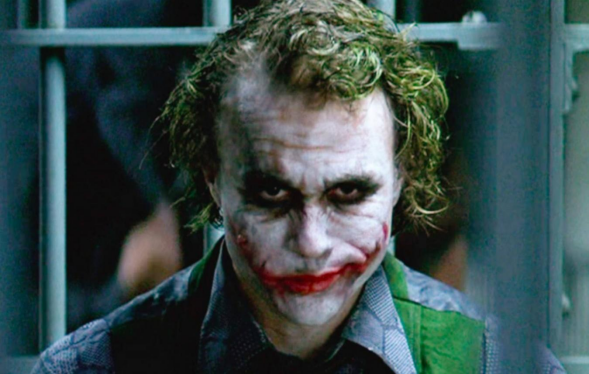
No discussion of the Batman universe is complete without an in-depth analysis of his relationship with his arch-nemesis, the Joker. They are the ultimate thesis and antithesis of the comic book world. Batman represents order, logic, and control; the Joker represents chaos, unpredictability, and madness.
The Unstoppable Force and the Immovable Object
The Joker’s origin is famously multiple-choice, which perfectly aligns with his chaotic nature. He does not commit crimes for wealth or power; his entire existence is dedicated to proving a philosophical point: that all it takes is “one bad day” to reduce the sanest man alive to lunacy. He views his conflict with Batman as a twisted game.
- Psychological Warfare: The Joker constantly targets Batman’s allies, such as Robin and Batgirl, to break Batman’s spirit and force him to abandon his moral code.
- Symbiotic Existence: The Joker often implies that he and Batman complete each other. Without Batman’s rigid rules to break, the Joker’s chaos has no meaning.
- The Ultimate Test: Every encounter with the Joker pushes Batman to the absolute limit of his sanity and his restraint, making the Joker the most dangerous threat to Batman’s soul.
This dynamic ensures that their war can never truly end. If Batman kills the Joker, the Joker wins the ideological battle. If the Joker kills Batman, the game is over, and the Joker loses his sole reason for existing.

Vehicles of Vengeance: The Batmobile and Beyond
To navigate the sprawling, treacherous streets of Gotham, Batman relies on a fleet of highly specialized vehicles. Foremost among these is the Batmobile, arguably the most famous vehicle in pop culture history. It is a rolling fortress, heavily armored and heavily armed with non-lethal riot control weaponry.
Engineering the Batmobile
The Batmobile is custom-built, often utilizing modified Wayne Enterprises military prototypes. It is powered by a jet turbine engine, allowing it to reach speeds that easily outpace GCPD cruisers and escaping criminals. Its heavy armor can withstand rocket-propelled grenades and sustained heavy machine-gun fire.
Beyond the Batmobile, Batman’s garage includes the Batcycle (or Batpod) for navigating narrow alleyways and heavy traffic with extreme agility. For aerial dominance, the Batwing provides rapid response capabilities across the city, equipped with silent hover technology and advanced sensory arrays. For aquatic operations, the Batboat allows Batman to patrol Gotham’s harbors and intercept smuggling operations. Each vehicle is integrated with the Batcomputer, allowing for remote piloting and seamless tactical coordination.

Psychological Warfare: Using Fear as a Weapon
Batman’s most potent weapon is not stored in his utility belt; it is the psychological concept of fear. Recognizing that “criminals are a superstitious, cowardly lot,” Bruce Wayne deliberately crafted a persona designed to exploit human primal fears of the dark and the unknown.
The Theatrics of the Dark Knight
Everything Batman does is carefully orchestrated to maximize psychological impact. He rarely strikes directly when he can first disorient and terrify his opponents. By taking out lights, moving silently, and picking off thugs one by one from the shadows, he creates a sense of omnipresence. He wants criminals to believe he is a supernatural entity, a vampire or a demon, rather than a man.
This theatricality extends to his interrogations. Batman uses the environment, extreme heights, and his imposing physical presence to extract information without having to resort to lethal violence. This mastery of psychological warfare allows him to defeat enemies before the physical fight even begins, making his war on crime highly efficient.

The Legacy of the Dark Knight
The legacy of Batman extends far beyond Bruce Wayne’s individual crusade. Recognizing that he cannot fight an entire city’s corruption alone, and acknowledging his own mortality, Batman has built an expansive network of allies known as the Bat-Family. This network represents the evolution of his mission from a solitary quest for vengeance into a collaborative movement for justice.
Building the Bat-Family
Characters like Nightwing (Dick Grayson), Oracle/Batgirl (Barbara Gordon), and the various iterations of Robin prove that Batman’s methods can be taught and his ideals shared. Furthermore, his uneasy alliance with Commissioner James Gordon demonstrates that vigilante justice and institutional law enforcement can, under the right circumstances, work together to achieve a greater good.
Ultimately, Batman is a symbol. He is the idea that one person, armed with indomitable will and unlimited resources, can stand against the tide of corruption and despair. Whether viewed as a traumatized billionaire or a modern mythological hero, the Dark Knight remains a compelling study in psychology, technology, and the enduring human spirit.
Frequently Asked Questions (FAQ)
- Why does Batman refuse to kill his enemies?
- Batman’s no-kill rule is a strict moral and psychological boundary. He believes that if he takes a life, he crosses the line from being an agent of justice to becoming a murderer, thereby making himself no better than the criminal who killed his parents. It is the core tenet that keeps his sanity intact.
- How does Bruce Wayne hide his Batman identity so effectively?
- Bruce Wayne uses his public persona as a vapid, irresponsible billionaire playboy as a camouflage. By acting foolish, constantly being seen at high-profile social events, and feigning a lack of physical prowess or deep intellect in public, he ensures that no one would ever suspect him of being the disciplined, brilliant Dark Knight.
- What is the most important gadget in Batman’s utility belt?
- While the Batarang is the most iconic, the grapple gun is arguably the most essential. It provides Batman with unparalleled vertical mobility, allowing him to traverse Gotham’s skyline, escape overwhelming odds, and execute stealth takedowns from advantageous high ground.
- Why are Batman’s villains considered the best in comic history?
- Batman’s rogues gallery is highly acclaimed because each villain represents a dark psychological reflection of Batman himself. They challenge him not just physically, but intellectually and morally. Characters like the Joker, Two-Face, and the Riddler test the limits of his ideology and his sanity.
- Where does Batman get his technology without arousing suspicion?
- Batman funnels resources through Wayne Enterprises, specifically the Applied Sciences division. By repurposing shelved military prototypes, funding “failed” R&D projects, and utilizing shell companies, Bruce Wayne can manufacture and acquire cutting-edge technology while hiding the paper trail from corporate oversight.