
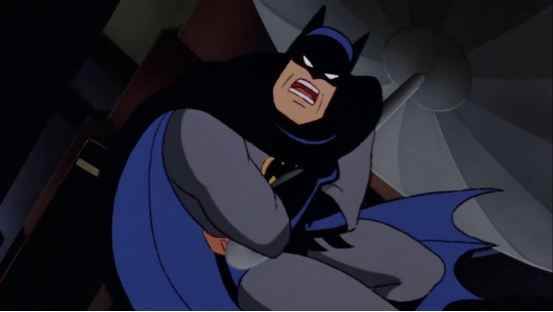
The Evolution of Batman: Actors Who Defined the Dark Knight
The character of Batman has undergone a fascinating metamorphosis since his first theatrical appearance. The role of Bruce Wayne and his vigilante alter ego is uniquely demanding, requiring an actor to balance the charismatic, billionaire playboy facade with the deeply traumatized, brooding creature of the night. Over the decades, various visionary directors have cast actors who brought entirely different dimensions to Gotham’s protector, creating a rich tapestry of cinematic interpretations that reflect the cultural zeitgeist of their respective eras.
Adam West: The Campy Crusader
In the 1960s, Adam West delivered a portrayal of Batman that was heavily influenced by the Pop Art movement and the comic book censorship of the era. West’s Batman was a bright, highly moral, and often comedic figure. His deadpan delivery of absurd dialogue and unwavering dedication to the law created an iconic, albeit campy, version of the character. This era was defined by colorful villains, onomatopoeic fight scenes (BAM! POW!), and a lighter tone that made Batman a household name, even if it strayed far from the character’s dark detective roots.
Michael Keaton: The Dark and Brooding Pioneer
When Tim Burton cast Michael Keaton in the 1989 blockbuster “Batman,” the decision was met with widespread skepticism. Keaton was primarily known as a comedic actor, but he silenced critics by delivering a profoundly psychological and understated performance. Keaton’s Bruce Wayne was socially awkward and visibly haunted, while his Batman was a silent, intimidating force of nature. This interpretation successfully returned the character to his gothic origins, establishing the blueprint for the modern superhero movie. Keaton’s portrayal emphasized the obsessive nature of the vigilante crusade, making audiences believe in the intense psychological fracture between the man and the bat.
Christian Bale: The Grounded and Gritty Realist
Christopher Nolan’s “The Dark Knight Trilogy” required an actor who could ground the mythos in stark reality. Christian Bale’s immersive, method-acting approach brought a visceral intensity to the role. Bale physically transformed himself, presenting a Bruce Wayne who was a highly trained ninja and a tactical genius. He distinctly separated his personas: the arrogant billionaire, the true Bruce Wayne in the Batcave, and the terrifying, growling Batman. Bale’s era explored the philosophical weight of vigilantism, the physical toll of crime-fighting, and the symbolic power of becoming an incorruptible ideal.
Ben Affleck and Robert Pattinson: Modern Interpretations
The DC Extended Universe introduced Ben Affleck as an older, world-weary, and brutally violent Batman. Heavily inspired by Frank Miller’s “The Dark Knight Returns,” Affleck’s portrayal showcased a seasoned crime fighter who had lost his moral compass, relying on sheer physical dominance and advanced, heavily armored gadgetry. His combat sequences remain some of the most comic-accurate and fluid in cinematic history.
Conversely, Matt Reeves’ “The Batman” (2022) cast Robert Pattinson as a Year Two vigilante. Pattinson stripped away the playboy persona entirely, presenting a Bruce Wayne who is a reclusive, Kurt Cobain-esque insomniac consumed by his nocturnal mission. This iteration heavily emphasized Batman’s title as the “World’s Greatest Detective,” focusing on forensic analysis, slow-burn mystery, and the character’s internal struggle with his own use of fear and vengeance.
| Actor | Defining Cinematic Era | Core Character Theme | Notable Director |
|---|---|---|---|
| Adam West | 1966 Theatrical Release | Campy, Moralistic, Pop-Art | Leslie H. Martinson |
| Michael Keaton | 1989 & 1992 | Gothic, Psychological, Obsessive | Tim Burton |
| Val Kilmer / George Clooney | Mid-to-Late 1990s | Neon-infused, Toy-driven, Lighter | Joel Schumacher |
| Christian Bale | 2005 – 2012 | Realistic, Philosophical, Tactical | Christopher Nolan |
| Ben Affleck | 2016 – 2023 | Veteran, Brutal, Comic-Accurate Combat | Zack Snyder |
| Robert Pattinson | 2022 – Present | Noir Detective, Grunge, Vengeance | Matt Reeves |

Deconstructing the Most Iconic Moments in Batman Cinema
The legacy of Batman on film is not merely built on the actors who played him, but on the unforgettable sequences that directors have crafted to immortalize the character. These iconic moments transcend typical action beats; they are masterclasses in visual storytelling, lighting, musical scoring, and character dynamics that permanently etch themselves into the cultural consciousness.
The “I’m Batman” Declaration (1989)
The opening sequence of Tim Burton’s 1989 film fundamentally changed how the general public perceived the superhero. Two muggers, having just robbed a family, are cornered on a misty, gothic rooftop. The slow reveal of Batman dropping behind them, impervious to bullets, culminates in the terrified criminal asking, “What are you?” Keaton hoists the man over the ledge, pulls him close, and delivers the whispered, chilling line: “I’m Batman.” This moment instantly erased decades of camp, re-establishing the character as a creature of nightmares utilized to strike terror into the hearts of criminals.
The Interrogation Scene (The Dark Knight, 2008)
Arguably the greatest scene in comic book movie history occurs in the fluorescent-lit interrogation room of the Gotham City Police Department. The spatial dynamic between Christian Bale’s Batman and Heath Ledger’s Joker is a masterclass in tension. What begins as a standard interrogation rapidly devolves into a brutal display of physical violence from Batman, contrasted sharply by the Joker’s hysterical laughter and philosophical taunts. This sequence brilliantly highlights the core thesis of the film: Batman’s physical strength is entirely useless against an antagonist who has no rules, no fears, and welcomes pain. It is a psychological breaking point for the hero.
The Flare Scene in the Flood (The Batman, 2022)
Matt Reeves crafted a visually stunning climax in “The Batman” that symbolized the character’s internal evolution. After the Riddler’s bombs flood Gotham, plunging the indoor arena into darkness, Batman drops into the chaotic, submerged wreckage. He ignites a vivid red flare, holding it aloft as a beacon of hope, and physically leads the trapped citizens out of the darkness. This moment represents a profound shift from a vigilante driven solely by “Vengeance” to a true hero who realizes he must be a symbol of hope and salvation for the people of Gotham.
- Visual Symbolism: The stark contrast of the red flare against the pitch-black water highlights Batman’s transition from the shadows to the light.
- Character Growth: He moves from punishing criminals to actively comforting and saving victims, a crucial step in his psychological healing.
- Cinematography: Greig Fraser’s Oscar-nominated camera work utilizes the flare as the sole practical light source, creating an intimate, classical painting aesthetic.

High-Octane Thrills: Famous Car Chase Scenes in Batman Movies
A crucial element of the Batman cinematic formula is the high-stakes vehicular pursuit. The Batmobile is not just a mode of transportation; it is an extension of Batman’s arsenal, a weapon of intimidation, and a marvel of fictional engineering. Directors have continuously pushed the boundaries of practical stunt work and special effects to deliver some of the most visceral and famous car chase scenes in action cinema.
The Tumbler’s Roof-Hopping Escape (Batman Begins, 2005)
Christopher Nolan introduced the “Tumbler” not as a sleek sports car, but as a repurposed military bridging vehicle. The chase sequence in “Batman Begins” is a masterwork of practical filmmaking. With Rachel Dawes poisoned and dying in the passenger seat, Batman must evade the entire Gotham police force. The sheer weight and power of the Tumbler are felt as it crushes police cruisers, bursts through concrete barriers, and remarkably, launches across city rooftops. The scene is grounded by the roaring, jet-engine sound design and the reliance on real stunt drivers operating a fully functional, custom-built 5,000-pound vehicle, making the stakes feel incredibly real and dangerous.
The Lower Levels Pursuit (The Dark Knight, 2008)
In “The Dark Knight,” the Joker targets a police convoy transporting Harvey Dent through the subterranean lower levels of Gotham. This multi-vehicle chase involves SWAT vans, garbage trucks, and an eighteen-wheeler. When the Tumbler takes catastrophic damage from an RPG, the sequence delivers one of the most unexpected and thrilling reveals in film history: the Batpod (a heavily armed motorcycle) violently ejects from the wreckage of the car. Batman’s subsequent navigation through the underground tunnels, utilizing the Batpod’s grappling cables to physically flip the Joker’s massive semi-truck end-over-end—a stunt performed entirely practically without CGI—remains a pinnacle of modern action filmmaking.
The Rain-Soaked Penguin Pursuit (The Batman, 2022)
Moving away from military tech, “The Batman” introduced a Batmobile that is a terrifying, custom-built muscle car. The chase between Batman and the Penguin takes place on a rain-slicked highway amidst heavy traffic. The sequence is defined by its horror-movie aesthetic; the Batmobile is shot like a predatory beast, its roaring V8 engine sounding like a mechanical monster. The climax of the chase features the Penguin causing a massive multi-car pileup, believing he has won, only for the Batmobile to violently launch through a wall of fire, ramming the Penguin’s Maserati and flipping it. The scene concludes with a mesmerizing upside-down shot of Batman approaching the wreckage, perfectly framing his relentless, unstoppable nature.

The Batmobile Phenomenon: Engineering the Ultimate Pursuit Vehicle
To truly appreciate the famous car chase scenes, one must dissect the engineering and design philosophy behind the Batmobiles themselves. Each iteration of the vehicle is a direct reflection of the director’s vision for Gotham City and the specific psychological profile of that era’s Bruce Wayne. The evolution of the Batmobile showcases a fascinating journey from sleek, comic-book aestheticism to brutal, utilitarian functionality.
From Art Deco Elegance to Military-Grade Armor
Anton Furst’s design for the 1989 Batmobile remains the quintessential silhouette for many fans. Combining elements of salt flat racers, Corvette Stingrays, and jet fighters, the Burton-era vehicle was a masterpiece of Art Deco design. It relied on sleek curves, a massive turbine engine, and hidden gadgetry like spherical bombs and heavy armor shielding. It was a vehicle designed to look fast while standing still, perfectly matching the gothic surrealism of Burton’s Gotham.
Contrastingly, the Nolan era demanded absolute pragmatism. The Tumbler was designed from the inside out, starting with the suspension required to land a 30-foot jump. It featured an aggressive, angular stealth-fighter aesthetic, devoid of any bat-motifs. Its weaponry was overt and devastating, reflecting a post-9/11 cinematic landscape where Batman operated more like a highly funded counter-terrorism unit than a traditional superhero.
The Role of Practical Effects in Chase Sequences
The success of these cinematic chases heavily relies on the commitment to practical effects. Instead of relying on green screens and computer-generated imagery, production teams have historically built fully operational vehicles. The 2022 Batmobile, for instance, featured a real 700-horsepower Chevy V8 engine and a four-wheel-drive system that allowed stunt drivers to perform genuine high-speed drifts and jumps. This dedication to physical reality ensures that the physics of the chase—the weight transfer, the tire smoke, the suspension compression—translate authentically to the screen, providing a visceral experience that CGI simply cannot replicate.

Comparing the Cinematic Eras: A Deep Dive into Directorial Vision
The longevity of Batman in cinema is largely due to the character’s malleability. Different directors have taken the core mythology—a traumatized orphan fighting crime—and filtered it through entirely different cinematic genres. This multi-dimensional approach has allowed the franchise to constantly reinvent itself, appealing to new generations of audiences while exploring different facets of the human condition.
Redefining the Superhero Genre
Tim Burton treated Batman as a gothic fairy tale, focusing on the outsider status of both the hero and the villains. His films were expressionistic, prioritizing mood, set design, and the psychological abnormalities of the characters. Christopher Nolan, however, approached the material as a sprawling, Michael Mann-esque crime epic. “The Dark Knight” is less a superhero movie and more a gritty urban thriller about corruption, escalation, and the fragility of societal order. This shift proved that comic book adaptations could achieve the highest levels of cinematic prestige, culminating in Heath Ledger’s posthumous Academy Award.
The Enduring Appeal of Gotham City
Gotham City itself is as much a character as the actors who portray Batman. The architecture and atmosphere of the city dictate the tone of the chases and the nature of the iconic moments. From the neon-drenched, colossal statues of Joel Schumacher’s era to the grim, rain-battered, decaying infrastructure of Matt Reeves’ vision, Gotham serves as a dark mirror reflecting the state of Bruce Wayne’s soul. It is a city that constantly demands saving, providing an eternal canvas for filmmakers to explore the endless war between order and chaos.
- Burton’s Gotham: Claustrophobic, timeless, heavily influenced by German Expressionism and 1930s architecture.
- Nolan’s Gotham: Expansive, realistic, modeled heavily on modern-day Chicago and New York, emphasizing institutional corruption.
- Reeves’ Gotham: Gothic revival mixed with modern urban decay, perpetually raining, emphasizing a systemic rot from within the city’s elite.
Frequently Asked Questions (FAQ)
- Who was the first actor to play Batman on screen?
- While Adam West popularized the character in the 1966 television series and subsequent film, the first actor to portray Batman on screen was Lewis Wilson in the 1943 theatrical serial, followed by Robert Lowery in the 1949 serial “Batman and Robin.”
- Which Batman movie features the most practical stunt work in its car chases?
- Christopher Nolan’s “The Dark Knight” (2008) is widely celebrated for its unparalleled practical stunt work, particularly the subterranean chase sequence which culminated in the real-life flipping of an 18-wheeler truck without the use of CGI.
- Why did Michael Keaton’s casting as Batman cause controversy in 1989?
- At the time of his casting, Michael Keaton was primarily known for his roles in comedies like “Mr. Mom” and “Beetlejuice.” Comic book fans were outraged, fearing that director Tim Burton was going to make a campy parody similar to the 1960s TV show. Keaton ultimately proved them wrong with his dark, serious portrayal.
- What makes the Batmobile in “The Batman” (2022) different from previous versions?
- Unlike the highly stylized Art Deco car of the 1989 film or the military-grade tank (Tumbler) of the Nolan trilogy, the 2022 Batmobile is designed as a DIY, retro-fitted American muscle car. It reflects a younger, less experienced Bruce Wayne who built the vehicle himself using salvaged parts, prioritizing raw engine power and intimidation over sleek gadgetry.
- Which cinematic Batman moment is considered the most comic-accurate?
- The warehouse rescue scene in “Batman v Superman: Dawn of Justice” (2016), featuring Ben Affleck, is widely regarded by fans and critics as the most comic-accurate depiction of Batman’s combat style. The choreography, use of gadgets, and fluid, brutal multi-opponent takedowns heavily mirror the combat mechanics of the “Batman: Arkham” video game series and the kinetic art style of modern DC comics.