
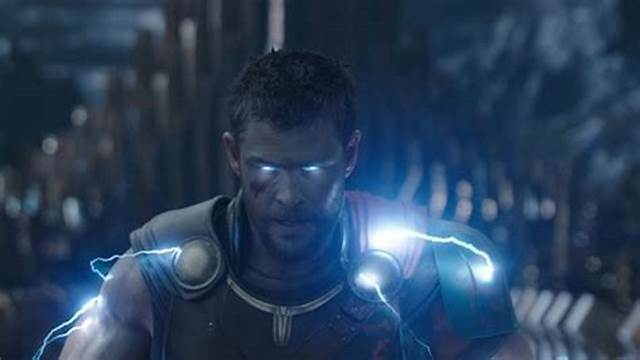
For centuries across Norse mythology and deeply amplified within modern cinematic universes, the God of Thunder has been synonymous with unstoppable force, roaring skies, and crackling energy. Audiences and scholars alike have been conditioned to anticipate the spectacular visual of lightning tearing through the darkness as the ultimate symbol of divine intervention. However, a deeper narrative analysis reveals a startling truth: the most defining, shocking, and transformative moments in Thor’s journey are not punctuated by the deafening crack of thunder, but by the silent, devastating fall of a tear. By examining the dichotomy between his cosmic power and his intimate human fragility, we can uncover a multidimensional character whose true strength is forged in the crucible of unimaginable loss.
The Dual Nature of the Thunder God: Lightning as Wrath or Tears?
The fundamental question that plagues the mythology of storm deities is one of elemental interpretation: when the skies break open and lightning strikes the earth, are we witnessing the uncontrollable wrath of a god, or the overwhelming manifestation of his sorrow? In literary and cinematic storytelling, the concept of the “pathetic fallacy” dictates that the weather perfectly mirrors the internal emotional state of the protagonist. For Thor, this creates a fascinating juxtaposition where his offensive weaponry is inextricably linked to his psychological trauma.
The Mythology of the Storm
Historically, lightning has been weaponized by storytellers to signify righteous fury. It is the ultimate tool of judgment, raining down upon the enemies of Asgard with unforgiving precision. Yet, as Thor’s character arc matures, the narrative shifts the paradigm. The electrical storms that surround him begin to lose their triumphant luster, instead becoming chaotic, unpredictable surges that represent his fracturing mental state. The lightning is no longer just a tool; it becomes a desperate, violent expression of the grief he cannot articulate through words.
Contrasting Power and Vulnerability
To truly understand the impact of Thor’s tears, we must contrast them directly against his physical manifestations of power. The shock value of a weeping god stems from the subversion of our expectations. We expect a deity to be stoic, unyielding, and emotionally impenetrable. When that facade shatters, the resulting emotional resonance far outlasts any computer-generated battle sequence.
| Narrative Element | Lightning (Physical Power) | Tears (Emotional Resonance) |
|---|---|---|
| Core Symbolism | Divine wrath, invincibility, and external conflict resolution. | Humanity, vulnerability, and internal psychological trauma. |
| Audience Reaction | Adrenaline, excitement, and awe at cinematic spectacle. | Empathy, shock, and profound emotional connection. |
| Character Impact | Defeats physical antagonists but leaves the character static. | Catalyzes profound character growth and redefines heroism. |
| Narrative Function | Advances the external plot and resolves action sequences. | Deepens the thematic core and explores the cost of godhood. |

First Shocking Moment: The Devastating Loss of Frigga
The first truly paradigm-shifting moment that proved Thor’s tears were more arresting than his lightning occurred in the immediate aftermath of Queen Frigga’s death. Up until this point, Thor had been portrayed largely as a brash, confident warrior whose primary method of mourning or dealing with frustration was physical destruction. However, the loss of his mother stripped away the armor of his arrogance, leaving behind a raw, unfiltered grief that fundamentally altered his trajectory.
The Illusion of Composure
When Loki is imprisoned, Thor visits him, attempting to maintain the stoic posture of a future king. The scene initially plays out as a battle of wits, but it is the quiet, devastating realization of their shared loss that breaks the tension. Thor does not summon a storm to rage against the dark elves; instead, he internalizes the agony. The sight of the mighty Thor, unable to protect the woman who shaped his morality, weeping in the sterile halls of Asgard, delivered a shock to the audience that no battle sequence could match.
- The Subversion of Expectations: Audiences anticipated a vengeful rampage. Instead, they were given a masterclass in quiet, suffocating grief.
- The Bonding of Brothers: This shared sorrow became the only bridge left between Thor and Loki, proving that shared tears hold more diplomatic power than a shared battlefield.
- The Maturation of a King: Frigga’s death marked the end of Thor’s boyhood. His tears signified the acceptance of consequence, a burden that lightning could never alleviate.

Second Shocking Moment: The Final Farewell to Loki
The complex, often toxic, yet undeniably profound relationship between Thor and Loki is the emotional spine of the Thunder God’s narrative. While their history is littered with betrayals, literal backstabbings, and cosmic warfare, the opening sequence of their encounter with the Mad Titan completely rewrote the rules of their dynamic. The sheer brutality of Loki’s demise was amplified infinitely by Thor’s helpless, tear-soaked reaction.
A God Bound and Broken
The absolute shock of this moment is derived from Thor’s physical impotence. Bound by scrap metal and silenced, the God of Thunder cannot summon a single spark of lightning to save his brother. He is forced to watch, wide-eyed and weeping, as the last remnant of his immediate family is choked to death. The tears streaming down Thor’s bruised face in this scene are harrowing. They represent the absolute failure of his physical power.
The Silence of the Storm
What makes this sequence a masterpiece of character development is the auditory contrast. There is no booming thunder to accompany Loki’s death. There is only the sickening sound of a snapping neck and Thor’s muffled, tearful cries. This intentional suppression of his elemental powers forces the audience to focus entirely on his emotional devastation.
In the aftermath, as the ship explodes and Thor is left floating in the vacuum of space, his tears freeze. This is a brilliant visual metaphor for his emotional state moving forward: a cold, hardened shell of grief that will ultimately drive him to the brink of insanity. The lightning he later summons in Wakanda is spectacular, but it is entirely fueled by the frozen tears shed over his brother’s corpse.

Third Shocking Moment: The Crushing Weight of the Snap
If the loss of his family broke Thor’s heart, his failure to stop the universal decimation broke his spirit entirely. The climax of his vengeance quest culminated in him driving his ax into the chest of his enemy, accompanied by the most powerful surge of lightning ever depicted on screen. Yet, this ultimate display of power was instantly rendered meaningless by a simple snap of the fingers. The transition from god-like triumph to absolute, weeping despair remains one of the most shocking pivots in modern storytelling.
The Anatomy of a Failure
Thor’s tears in the aftermath of the snap are not just tears of sorrow; they are tears of profound guilt and existential terror. He had the power. He had the weapon. He delivered the fatal blow. But his ego—his need to look his enemy in the eye and gloat—cost the universe half its population. When he whispers, “What did you do?”, his voice cracks, stripping away the booming baritone of the Thunder God to reveal a terrified, broken man.
The Descent into Apathy
The shockwave of this moment reverberates into his subsequent years of depression. The physical transformation he undergoes is merely a symptom of the internal weeping that never ceased. When he finally travels back in time and encounters his mother again, the dam breaks. The sight of a disheveled, traumatized Thor crying into his mother’s shoulder, admitting that he is a failure, is a profound statement on mental health. It proves definitively that no amount of lightning can cure post-traumatic stress disorder, and that true healing begins only when a god allows himself to weep like a mortal.

The Psychological Evolution of Thor: From Arrogant Prince to Broken King
By synthesizing these moments of profound vulnerability, a clear psychological evolution emerges. Thor begins his journey under the delusion that physical might equates to worthiness. His early reliance on his hammer and his lightning is a crutch, a mechanism to avoid dealing with complex emotional realities. However, the universe systematically strips away everything he loves, forcing him to confront the void left behind.
Redefining What it Means to be Worthy
The concept of “worthiness” is central to Thor’s mythos. Initially, worthiness is defined by battle prowess and noble intentions. But as his tears begin to outweigh his victories, the definition evolves. Worthiness becomes about resilience. It is about the ability to experience apocalyptic grief, to weep openly, and to still choose to protect those who remain. His tears do not make him weak; they are the very proof of his enduring humanity.
- Phase 1: The Shield of Arrogance. Lightning is used as a tool of intimidation and control. Emotions are viewed as a mortal weakness.
- Phase 2: The Cracks in the Armor. Devastating personal losses introduce grief. Tears are shed in private, hidden away from the realms he protects.
- Phase 3: The Acceptance of Vulnerability. Complete psychological collapse. Tears are shed openly. Lightning is no longer a tool of arrogance, but a desperate lifeline.

The Cinematic Symbolism of Storms: Weather as an Emotional Canvas
From a purely cinematic and structural perspective, the orchestration of Thor’s powers and his emotional breakdowns represents a masterclass in visual storytelling. Directors and cinematographers have meticulously crafted a visual language where the weather acts as a secondary character, providing an emotional canvas that externalizes Thor’s internal trauma.
The Roar of Grief
Consider the moments preceding his tears. Often, the skies will darken, the pressure will drop, and thunder will rumble—not as a prelude to a fight, but as a manifestation of a panic attack. When Thor realizes the finality of his losses, the storm does not break into a violent tempest; instead, it dissipates into a quiet, mournful rain. This deliberate subversion of the “storm god” trope ensures that the audience remains focused on the actor’s performance rather than the special effects.
Ultimately, the lightning bolts are the wrath of the god, but the tears are the truth of the man. The shock value of his weeping lies in its profound relatability. We may never know what it feels like to summon a hurricane, but we all know the crushing weight of grief. By allowing the God of Thunder to cry, storytellers elevated him from a two-dimensional mythological caricature into one of the most deeply humanized characters in modern fiction.
Frequently Asked Questions (FAQ)
- Q1: Why are Thor’s tears considered more shocking than his displays of lightning?
- Thor’s tears are more shocking because they subvert deeply ingrained audience expectations. As a god of thunder, his physical power and lightning are anticipated elements of his character. However, raw, unfiltered emotional vulnerability from a supposedly invincible deity humanizes him instantly, creating a stark, unexpected contrast that resonates on a much deeper psychological level than any action sequence.
- Q2: How does the concept of the “pathetic fallacy” apply to Thor’s character arc?
- The pathetic fallacy is a literary device where the weather reflects a character’s internal emotional state. For Thor, his elemental control over storms is often directly tied to his mood. While lightning traditionally represents his wrath and combat readiness, the sudden cessation of storms, or the transition into quiet, mournful rain, perfectly mirrors his descent into grief, making his powers an extension of his psychological trauma.
- Q3: What role did Loki’s death play in changing the perception of Thor’s powers?
- Loki’s death highlighted the absolute limitations of Thor’s physical powers. Bound and gagged, Thor was entirely incapable of using his lightning to save his brother. This forced him into a state of total helplessness, proving that all the cosmic power in the universe cannot prevent tragedy. His tears in this moment represented the crushing realization of his own impotence.
- Q4: Does crying make Thor less “worthy” in the context of his mythology?
- No, it actually redefines and deepens his worthiness. Initially, worthiness was tied to bravery and strength in battle. Through his profound losses, worthiness evolved to encompass emotional resilience, empathy, and the ability to endure catastrophic grief while still choosing to fight for the greater good. His tears are a testament to his immense capacity for love, which is his true greatest strength.
- Q5: How do Thor’s emotional moments compare to his physical battles in terms of character development?
- While physical battles advance the external plot and provide cinematic spectacle, they rarely change Thor’s internal landscape. It is strictly his emotional battles—mourning his mother, watching his brother die, and failing to stop universal decimation—that force him to mature, confront his ego, and evolve from an arrogant prince into a deeply empathetic, albeit broken, king.