
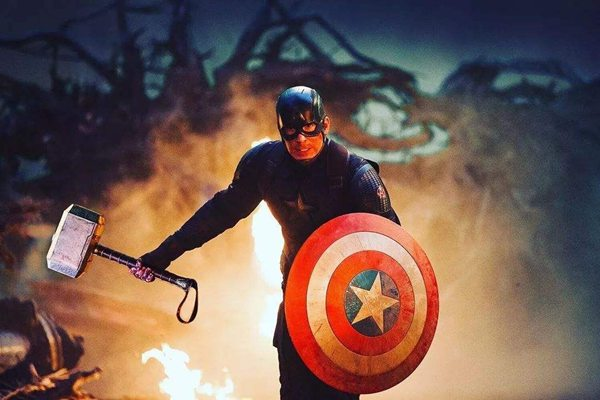
Among the numerous classic scenes in the Marvel Cinematic Universe, the moment when Captain America, Steve Rogers, grasps Thor Odinson’s Mjölnir and wields it to battle against Thanos’ army is undoubtedly one of the most shocking and awe – inspiring. This scene not only gets the audience excited but also contains rich symbolic meaning and a profound interpretation of heroic qualities. Captain America’s ability to lift Mjölnir is by no means a simple transfer of power; it represents the highest recognition of his heroic qualifications. It shatters the narrow concept of power – supremacy and reshapes people’s definition of a hero.
The Divine Symbol of Heroic Qualifications
In Norse mythology and the Marvel setting, Mjölnir is no ordinary weapon. Forged by the artisans of Asgard using Uru metal and enchanted by Odin, only those “worthy” can lift it. This worthiness is not merely about physical strength but is a comprehensive consideration of qualities such as morality, courage, wisdom, and a sense of responsibility. Initially, Thor was arrogant and impulsive, which led to Odin depriving him of the ability to lift the hammer. It was not until he endured hardships and learned humility, respect, and responsibility that he regained this recognition.
The Early Hint of Captain America’s Ability to Lift Thor’s Hammer
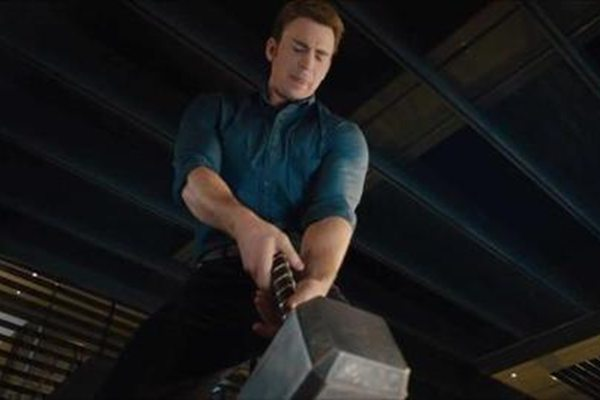
In the movie Avengers: Age of Ultron, Thor playfully challenged all the heroes to try and lift his hammer. Everyone around the table gave it a shot, but no one could budge it. However, when Captain America made an attempt, the hammer moved ever so slightly. This subtle movement visibly affected Thor’s expression. Eventually, Captain America didn’t fully lift the hammer, and Thor seemed relieved.
There are several possible reasons for Captain America’s ability to move the hammer slightly. It could be that he didn’t have enough strength to lift it completely, or perhaps the hammer recognized Captain America to some extent. Another possibility is that Captain America noticed Thor’s reaction and, considering the fragile unity of the team and not wanting to embarrass Thor or lose such a powerful ally, deliberately refrained from fully lifting the hammer. This incident foreshadowed Captain America’s ability to lift Thor’s hammer in Avengers: Endgame.
Shattering the Myth of Power – Supremacy
In many superhero stories, power is often regarded as the decisive factor. It seems that with great power, one can defeat enemies and save the world, and having power is equated with being a hero. However, the scene of Captain America lifting Mjölnir shatters this simplistic and one – sided perception.
Captain America’s power is not at the top tier in the Marvel Universe. In terms of physical strength, there are super – soldiers like the Hulk who are more robust; in terms of energy output, Asgardian warriors such as Thor far exceed him. Yet, he can lift Mjölnir, a weapon that Thor himself temporarily lost control of. This demonstrates that power is not the sole criterion for being a hero. Captain America proves with his actions that a hero is defined not by the magnitude of their power but by the qualities of their heart and their unwavering commitment to justice.

As a veteran hero in the Marvel Universe, Captain America’s actions influence generations of superheroes. His ability to lift Mjölnir is not only a testament to his own heroic qualifications but also an inspiration to the younger heroes. He shows them through his deeds what qualities and spirit are necessary to become a true hero. This spirit of inheritance ensures the continuation and development of the heroic stories in the Marvel Universe.