
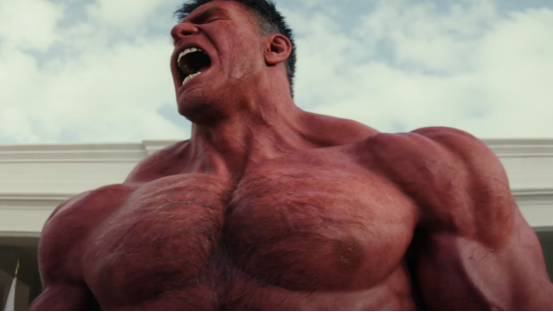
The Marvel Cinematic Universe (MCU) is undergoing a seismic shift with the introduction of Captain America: Brave New World. At the center of this political and superhuman storm is the transformation of Thaddeus “Thunderbolt” Ross into the formidable Red Hulk. This transition marks a significant milestone, not only for the character’s arc but also for the legendary Harrison Ford, who steps into the role previously held by the late William Hurt. As Ross ascends to the Presidency of the United States, his evolution into a gamma-powered behemoth serves as the primary antagonist to Sam Wilson’s Captain America, creating a conflict that is as ideological as it is physical.
The Evolution of Thaddeus Ross: From General to Red Hulk
Thaddeus Ross has always been defined by his obsession with power and control. Originally introduced as a General hunting Bruce Banner, Ross has transitioned through various roles, including Secretary of State and now, President of the United States. This political elevation provides the narrative foundation for his transformation. Unlike Bruce Banner’s Hulk, which was born of a scientific accident, Ross’s transformation into the Red Hulk is depicted as a calculated, albeit desperate, move to maintain order and assert dominance in a world filled with “enhanced individuals.”
The Political Landscape of Brave New World
In Captain America: Brave New World, the stakes are higher than ever. President Ross aims to bring the Avengers back under government oversight, a move that echoes the Sokovia Accords but with a more aggressive, nationalistic fervor. The thematic core of the film explores what happens when the man holding the highest office in the land becomes the very thing he once hunted. This irony is not lost on the characters, particularly Sam Wilson, who must navigate the complexities of fighting his own Commander-in-Chief.
- Strategic Ambition: Ross believes that a “World Power” needs a “Super Power” under its direct command.
- Personal Vendetta: His history with gamma radiation and the Hulk legacy makes his transformation a full-circle moment for the MCU.
- Global Conflict: The presence of the Red Hulk shifts the balance of global military power, prompting reactions from international players.

Harrison Ford’s Performance and the Motion Capture Process
Transitioning from the grounded roles of Indiana Jones and Han Solo to a CGI-heavy character like Red Hulk presented a unique challenge for Harrison Ford. The actor has been candid about the experience, often using his trademark dry wit to describe the process. Ford had to undergo extensive motion capture (Mo-Cap) sessions, wearing the specialized “gray suit” with tracking markers to ensure his facial expressions and physical nuances were translated onto the digital model of the Red Hulk.
The “Doing It for Money” Controversy and Context
In various interviews, Ford jokingly remarked that he took the role “for the money,” but his deeper reflections reveal a professional respect for the craft of modern blockbuster filmmaking. He acknowledged that to be a relevant actor in today’s industry, one must “do what the audience wants” and embrace the technological shifts in storytelling. Despite the humor, the production team has praised Ford’s commitment to the role, noting that he brought a level of “gravitas and grumpiness” that perfectly suits the character of Thaddeus Ross.
| Aspect of Performance | Details and Methodology |
|---|---|
| Facial Performance | Advanced HMC (Head-Mounted Camera) systems captured Ford’s specific scowls and jaw movements. |
| Physical Presence | Ford worked with stunt coordinators to define the “weight” of Red Hulk’s movements. |
| Voice Acting | The character’s voice is a modulated version of Ford’s natural bass, enhanced for a “monstrous” effect. |

Why the Red Hulk Reveal Was Inevitable
In an era of intense internet scrutiny and toy leaks, keeping a character as significant as Red Hulk a secret is nearly impossible. Director Julius Onah addressed the decision to reveal Red Hulk early in the marketing campaign, specifically in the first teaser trailer. Onah explained that the character is so central to the film’s identity that attempting to hide him would have been counterproductive to the storytelling and the marketing strategy.
The Marketing Strategy and Audience Expectations
The director noted that the “secret” was essentially an open one among Marvel fans who are familiar with the source material. By leaning into the reveal, the marketing team could focus on the “how” and “why” of the transformation rather than just the “who.” This transparency allowed the production to showcase the spectacular visual effects early on, building hype for the physical confrontation between Sam Wilson and Ross.
Julius Onah emphasized that the film is a “paranoid thriller,” and the Red Hulk represents the ultimate physical manifestation of the hidden threats Sam Wilson faces. The reveal serves to set the tone: this is a movie where the threats are massive, visible, and seemingly unstoppable.

Analyzing the Battle: Sam Wilson vs. Red Hulk
The core conflict of Captain America: Brave New World culminates in a series of high-stakes battles, most notably the sequence at the White House. This fight is not just a clash of titans but a clash of philosophies. Sam Wilson, as the new Captain America, relies on his flight capabilities, tactical intelligence, and the iconic vibranium shield. In contrast, the Red Hulk represents raw, unchecked power and heat-based aggression.
Tactical Breakdown of the White House Sequence
The battle begins when President Ross undergoes a sudden and violent transformation during a public event. The sequence is designed to highlight the destructive potential of the Red Hulk within a confined, high-security environment. Sam Wilson must use his wings not just for flight, but as defensive tools to mitigate the shockwaves generated by Red Hulk’s strikes.
- Aerial Maneuverability: Sam uses his agility to stay out of Ross’s reach, employing the “hit and run” tactics he perfected as Falcon.
- The Shield’s Role: The shield is used to deflect the intense thermal energy emitted by Red Hulk when he “heats up.”
- Collateral Damage Control: A significant portion of the fight involves Sam trying to protect civilians and the historical integrity of the White House.

Red Hulk’s Unique Powers and MCU Mechanics
While he shares the super-strength and durability of Bruce Banner’s Hulk, the Red Hulk possesses a unique set of abilities that make him a different kind of threat. The most significant of these is his thermokinetic generation. Unlike the Green Hulk, who gets stronger as he gets angrier, the Red Hulk emits increasing levels of intense heat as his rage grows. This creates a dangerous environment for anyone in his immediate vicinity, as he can literally melt metal and cause spontaneous combustion.
Comparing Green Hulk and Red Hulk
The mechanics of the Red Hulk’s power set him apart in the following ways:
- Heat Emission: He does not have a “cooling” mechanism; the hotter he gets, the more exhausted he eventually becomes, which is a potential tactical weakness.
- Retained Intelligence: Unlike early iterations of Bruce Banner’s Hulk, Thaddeus Ross retains his tactical military mind and cognitive functions while in Hulk form.
- Energy Absorption: In the comics, Red Hulk can absorb various types of energy, including gamma and cosmic radiation, though it remains to be seen how much of this will be featured in the MCU.

The Visual Effects and Design of Red Hulk
Creating a digital character that looks like Harrison Ford but carries the mass of a Hulk required a collaboration between multiple VFX houses, including Industrial Light & Magic (ILM). The design team focused on maintaining Ford’s recognizable facial structure—specifically his brow and mouth—to ensure that the audience could still “see” the actor behind the red skin and glowing yellow eyes.
The skin texture of the Red Hulk was a point of intense focus. Designers wanted to avoid a “plastic” look, instead opting for a leathery, vascular texture that suggests the immense pressure the transformation puts on the human body. The “glow” effect, representing the internal heat, was integrated into the muscle fibers, making the character appear as though he is an active furnace.

Future Implications for the MCU
The introduction of Red Hulk is not a one-off event. It signals a shift toward a more “grounded” yet high-powered political landscape in the MCU. With the Thunderbolts* movie on the horizon, the presence of Thaddeus Ross as a superpowered President creates a ripple effect across the entire franchise. It raises questions about the legality of superheroes and the government’s role in creating its own “deterrents.”
Furthermore, the Red Hulk’s existence opens the door for other Hulk-related characters, potentially leading to a “World War Hulk” scenario or a deeper exploration of the Leader’s (Samuel Sterns) machinations, as he is also confirmed to return in Brave New World. The dynamic between Sam Wilson and the Red Hulk will likely define the “New World” order for the Avengers moving forward.
Frequently Asked Questions (FAQ)
- Q1: Does Harrison Ford actually perform the stunts for Red Hulk?
- While Harrison Ford performed the motion capture for facial expressions and basic movements, the heavy-duty action and complex stunts were handled by stunt performers and digital animators to ensure the character’s superhuman scale was accurately portrayed.
- Q2: Why is the Red Hulk red instead of green?
- In the lore, the red color is a result of a different radiation process and a specific serum used by Ross. Functionally, it differentiates him from Bruce Banner and signifies his unique heat-generation powers, which are not present in the standard Green Hulk.
- Q3: Is Red Hulk stronger than the original Hulk?
- In terms of raw strength, they are comparable. However, Red Hulk’s greatest advantage is his ability to retain his tactical military intelligence and his heat-emission power. His weakness is that he can “overheat” if he stays in his transformed state for too long or gets too angry.
- Q4: How does Sam Wilson stand a chance against Red Hulk?
- Sam Wilson uses his vibranium wings and shield to absorb and deflect Red Hulk’s massive blows. His strategy relies on speed, technology, and tactical maneuvering rather than trying to match the Red Hulk’s physical strength directly.
- Q5: Will Red Hulk appear in the Thunderbolts* movie?
- While not officially confirmed for a lead role, Thaddeus “Thunderbolt” Ross is the namesake of the team, and his presence in the MCU as a superpowered figure makes a cameo or a supporting role highly likely given the interconnected nature of the films.