
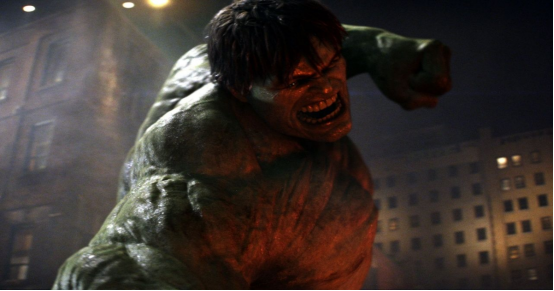
The character of the Hulk stands as one of the most complex figures in the Marvel mythos, serving as a living embodiment of the duality of man. What began as a tragic accident involving gamma radiation evolved into a multi-decade exploration of trauma, identity, and redemption. To understand the Hulk is to understand the constant tug-of-war between the brilliant, yet fragile, Dr. Bruce Banner and the unstoppable force of nature that is his alter ego. This guide dissects that journey, moving from the early days of rampaging chaos to the eventual emergence of a wise, integrated protector.
The Genesis of Rage: Understanding the Rampaging Beast
The origin of the Hulk is rooted in a moment of selfless heroism that led to a lifetime of internal horror. When Dr. Bruce Banner sprinted onto a nuclear test site to save a teenager named Rick Jones from a Gamma Bomb explosion, his cellular structure was irrevocably altered. The resulting entity, the Savage Hulk, was a manifestation of Banner’s repressed anger and childhood trauma, triggered by adrenaline and emotional distress.
The Gamma Accident and the Birth of Chaos
The initial transformations were not merely physical; they were a complete fracturing of the psyche. In the early stages, the Hulk was often depicted as a grey, surly brute before the iconic green hue became the standard. This “Savage Hulk” possessed limited vocabulary and a primal instinct for survival. Every time Banner transformed, he lost his agency, becoming a passenger in a body that leveled cities and fought off entire military divisions led by General “Thunderbolt” Ross.
The Burden of Unstoppable Power
The “Rampaging Beast” era was defined by isolation. Banner spent years as a fugitive, viewing the Hulk as a curse or a “disease” that needed to be cured. The tragedy of this period lies in the fact that the Hulk’s rampages were rarely malicious; they were the defensive reactions of a frightened, misunderstood creature. The weight of the destruction left in the Hulk’s wake created a cycle of guilt that further fractured Banner’s mental state, making the prospect of control seem like an impossible dream.

The Vulnerable Soul: The Man Behind the Monster
Beyond the muscles and the roar lies a deeply vulnerable soul. Modern interpretations of the Hulk have shifted focus from the external damage to the internal psyche, revealing that the Hulk is not just a monster, but a protector of the wounded child living inside Bruce Banner. This psychological depth is what separates the Hulk from other “powerhouse” characters in fiction.
Bruce Banner’s Internal Psychological Conflict
Psychological analysis of Banner often points toward Dissociative Identity Disorder (DID). The Hulk is a distinct personality that emerged to handle the pain that Bruce could not process. This vulnerability is most evident during moments of quiet, where the Hulk expresses a desire to be “left alone.” The green skin acts as a literal and metaphorical armor against a world that has only ever offered Banner pain, starting with his abusive father, Brian Banner. By acknowledging the Hulk as a manifestation of trauma, we see the “beast” as a tragic figure rather than a villain.
The Trauma of Isolation and Public Perception
The world sees a monster; the Hulk sees a world that hates him. This feedback loop reinforces the Hulk’s rage. However, beneath that rage is a profound sense of loneliness. In various story arcs, such as those on the planet Sakaar, we see the Hulk’s capacity for love, leadership, and friendship. When the external world stops attacking him, the “monster” begins to stabilize, proving that the rage was always a secondary response to external stimuli and internal grief.

The Path to Synthesis: From Conflict to Coexistence
The most significant turning point in the Hulk’s history is the transition from two warring entities to a single, integrated being. This evolution represents the ultimate victory for Bruce Banner: the ability to stop fighting himself and start embracing the totality of his existence.
The Struggle for Control in the Avengers Era
During his time with the Avengers, the relationship between Banner and Hulk fluctuated between “controlled asset” and “unpredictable liability.” The fear of “losing the wheel” dominated Banner’s interactions with his teammates. However, through the use of meditation, scientific safeguards, and emotional support from allies like Tony Stark and Natasha Romanoff, Banner began to find the seams in the Hulk’s consciousness. This period was essential for proving that the Hulk could be channeled toward a greater good, setting the stage for a more permanent solution.
The Emergence of the Wise Guardian
The culmination of this journey is often referred to as “Smart Hulk” or “Professor Hulk.” In this state, the physical power of the Hulk is fused with the genius-level intellect of Bruce Banner. This is not merely a compromise; it is a synthesis. As a wise guardian, the Hulk no longer smashes out of blind fury but acts with calculated precision. He becomes a scientist, a mentor, and a diplomat. This version of the character represents the resolution of Banner’s lifelong trauma, showing that one can harness their “inner monster” to become a more complete version of themselves.
| Attribute | Savage Hulk (Raging Beast) | Professor Hulk (Wise Guardian) |
|---|---|---|
| Intelligence | Primal / Child-like | Genius-level / Scientific |
| Emotional State | Volatile / Reactive | Stable / Rational |
| Communication | Broken English / Grunts | Fluent / Eloquent |
| Primary Motivation | Survival / Defense | Protection / Problem Solving |
| Social Role | Outcast / Threat | Leader / Avenger |

Legacy of the Green Goliath: A Hero Reimagined
The transformation of the Hulk from a raging beast to a wise guardian has left an indelible mark on popular culture. It serves as a powerful metaphor for mental health, self-acceptance, and the potential for change. No longer just a cautionary tale about nuclear power, the Hulk is now a symbol of resilience.
Philosophical Meaning of Power and Restraint
The “Wise Guardian” persona teaches a vital lesson: true power is not found in the ability to destroy, but in the discipline to restrain that destruction. By choosing to use his strength for construction and protection, the Hulk transcends his original purpose. This evolution mirrors the human experience of maturing—learning to manage our darker impulses and channeling our energy into productive, meaningful endeavors.
Impact on the Marvel Cinematic Universe
In the MCU, the Hulk’s arc from the 2012 *Avengers* to *Avengers: Endgame* and beyond showcases this growth visually and narratively. We see him go from a “ticking time bomb” to the hero who executes the “Snap” to save the universe. His ability to handle the power of the Infinity Stones was only possible because of the balance he achieved between his mind and his body. He is the ultimate guardian because he understands the cost of power and the value of a gentle touch.
Frequently Asked Questions (FAQ)
- Q1: What caused the initial transformation of Bruce Banner into the Hulk?
- Bruce Banner was transformed after being exposed to a massive dose of gamma radiation during a nuclear test. He was attempting to save a young man named Rick Jones who had wandered onto the test site. The radiation triggered a mutation in Banner’s DNA, linked to his latent psychological trauma, creating the Hulk persona.
- Q2: Is the Hulk a separate person from Bruce Banner?
- Psychologically, the Hulk is often portrayed as a separate personality (an “alter”) within Bruce Banner’s mind, a result of Dissociative Identity Disorder. While they share the same body, they often have different memories, emotions, and levels of intelligence, though they eventually find a way to merge.
- Q3: How did Bruce Banner become “Smart Hulk” or the “Wise Guardian”?
- In the comics and the MCU, this occurred through a process of integration. Banner spent years in a gamma lab treating the Hulk not as a disease, but as a part of himself. By merging the physical strength of the Hulk with his own conscious mind, he achieved a state of permanent synthesis.
- Q4: Can the Hulk be killed?
- The Hulk possesses one of the most advanced regenerative healing factors in the Marvel Universe, making him virtually immortal. He can regenerate entire limbs and organs in seconds. While he can be incapacitated, killing him permanently is nearly impossible due to his body’s adaptive response to trauma.
- Q5: Why is the Hulk’s skin green?
- While originally intended to be grey, printing issues in the first issues of the comic led to a green appearance. This was later canonized as the standard color, though different colors (like Grey and Red) represent different personalities and power sets within the Hulk mythos.