
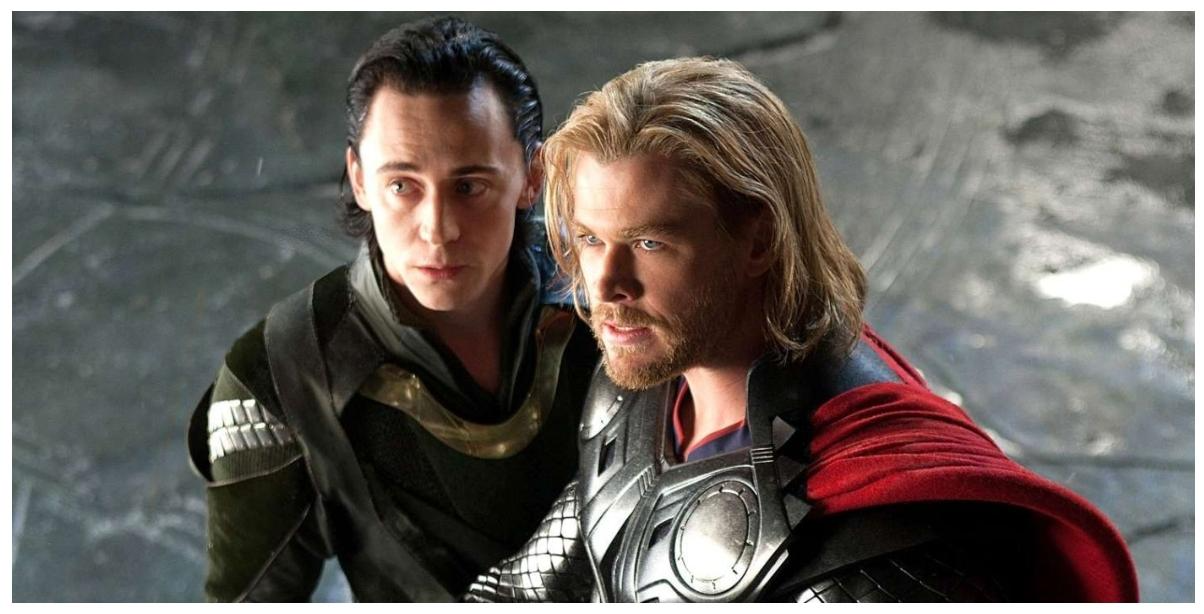
The cinematic journey of Marvel’s God of Thunder is as complex and fascinating as the mythological roots from which the character was born. Long before Chris Hemsworth wielded the iconic hammer in the Marvel Cinematic Universe (MCU), the adaptation of Thor went through numerous creative iterations, the most captivating of which was spearheaded by visionary director Guillermo del Toro. Simultaneously, the lore surrounding Thor’s weapon, Mjolnir, has sparked intense curiosity not just among comic book fans, but within the global scientific community. By bridging the gap between Hollywood’s unmade masterpieces and real-world astrophysics, we can uncover a richer understanding of Thor’s enduring legacy.
The Untold History of Guillermo del Toro’s Unmade Thor Film
In the mid-2000s, before the MCU became the interconnected cinematic juggernaut it is today, Marvel Studios was actively exploring different avenues to bring their core Avengers to the silver screen. Guillermo del Toro, fresh off his success with visually stunning and atmospherically dark films like Pan’s Labyrinth and Hellboy, was approached to direct a live-action Thor movie. His involvement remains one of the most tantalizing “what-ifs” in superhero cinema history.
Del Toro’s Original Vision for the God of Thunder
Guillermo del Toro is renowned for his deep appreciation of folklore, practical effects, and monstrous creature designs. His pitch for Thor heavily leaned into the raw, untamed aspects of Norse mythology rather than the polished, science-fantasy aesthetic that Kenneth Branagh eventually brought to the 2011 film. Del Toro envisioned a visceral, gritty Valhalla, populated by terrifying frost giants and mythical beasts that felt genuinely ancient and otherworldly. The narrative would have focused heavily on the turbulent, almost Shakespearean dynamics between the Norse gods, but grounded in a dark fantasy tone.
This approach aimed to strip away the traditional superhero tropes. Instead of a fish-out-of-water comedy on Earth, del Toro’s concept was deeply embedded in the Nine Realms. The thematic core revolved around the brutal reality of immortality and the heavy burden of godhood, presenting Thor not just as a hero, but as a flawed, tempestuous deity learning the true weight of his power.
Why the Project Was Ultimately Abandoned
Despite the immense potential of a del Toro-directed Thor, the collaboration ultimately dissolved due to a combination of creative divergence and scheduling conflicts. The primary factors that led to the project’s cancellation included:
- Creative Differences: Marvel Studios was beginning to formulate a unified, accessible cinematic universe. Del Toro’s dark, mythologically dense, and potentially R-rated vision clashed with the family-friendly, interconnected tone Marvel required for the eventual The Avengers crossover.
- The Hobbit Commitment: During the same period, del Toro was offered the directorial chair for Peter Jackson’s The Hobbit trilogy. The massive scope of the Middle-earth project demanded his full attention, forcing him to step away from the Marvel universe.
- Budgetary Constraints: The extensive practical effects, elaborate makeup, and massive set designs required to bring del Toro’s authentic Norse mythology to life presented a significant financial risk for Marvel Studios at a time when they were independently financing their films.
While del Toro eventually departed The Hobbit as well, his exit from Thor paved the way for Kenneth Branagh, whose theatrical background perfectly suited the regal, dramatic tone that introduced Chris Hemsworth’s Thor to global audiences.

Del Toro’s Dark Norse Vision vs. The MCU Reality
Analyzing the divergence between what could have been and what actually materialized provides profound insight into modern blockbuster filmmaking. Guillermo del Toro’s unmade script treatments emphasized the grotesque and the sublime, elements that are largely absent from the bright, colorful cosmic adventures of the current MCU.
The Shift from Dark Fantasy to Science-Fiction
When Marvel pivoted away from del Toro, they made a deliberate choice to recontextualize Norse magic as advanced alien technology. In the 2011 Thor film, the famous line “magic’s just science that we don’t understand yet” became the foundational philosophy for Asgard. This was a stark contrast to del Toro’s vision, which would have embraced the inexplicable, mystical nature of the runes, ancient bloodlines, and dark sorcery inherent in the original Eddas.
Character Design and World-Building
Under del Toro’s guidance, characters like Loki and Odin would likely have possessed a more monstrous, ancient aesthetic, drawing inspiration from classical mythological paintings rather than comic book spandex. The architecture of Asgard would have been carved from living stone and ancient wood, rather than the gleaming golden spires created by Marvel’s visual effects teams. While the MCU’s Asgard is undeniably breathtaking, del Toro’s version would have offered a hauntingly beautiful, gothic alternative that emphasized the terrifying awe of encountering actual gods.

The Mythological Origins of Mjolnir: Uru Metal Explained
Central to the legend of Thor, regardless of the cinematic adaptation, is his mighty hammer, Mjolnir. To understand the weapon’s real-life physical equivalents, one must first deconstruct its comic book and mythological origins. In Marvel lore, Mjolnir is not made of any earthly substance; it is forged from a fictional, magical ore known as Uru.
Forged in the Heart of a Dying Star
The creation myth of Mjolnir is one of the most epic tales in comic history. The hammer was crafted by the dwarven blacksmiths of Nidavellir, led by Eitri. According to the lore, they used the core of a dying star as the heat source to forge the Uru metal. The process was so intensely violent and catastrophic that the star went supernova, nearly destroying the earth in the process (which, in some comic storylines, is cited as the event that wiped out the dinosaurs).
The Magical Properties of Nidavellir’s Craftsmanship
Uru metal is unique because it is highly symbiotic with magic. It absorbs mystical energies like a sponge, making it the perfect conduit for Odin’s enchantments. The most famous of these is the worthiness enchantment: “Whosoever holds this hammer, if he be worthy, shall possess the power of Thor.” This enchantment fundamentally alters the physical properties of the hammer, anchoring it in space-time against the force of anyone deemed unworthy, effectively making it infinitely heavy to the wrong user, yet perfectly balanced for Thor.

What is Thor’s Hammer Made of in Real Life? A Scientific Analysis
While Uru is entirely fictional, the description of Mjolnir being forged in a dying star has prompted physicists and materials scientists to hypothesize what the hammer would be made of if it existed in our universe. The intersection of comic book lore and quantum mechanics provides a fascinating thought experiment.
Neil deGrasse Tyson’s Neutron Star Theory
Astrophysicist Neil deGrasse Tyson famously weighed in on the Mjolnir debate with a viral calculation. Taking the comic book claim that Mjolnir was forged from the core of a dying star literally, Tyson proposed that the hammer is made of neutron star matter. A dying star that collapses into a neutron star compresses mass to an incomprehensible density.
According to Tyson’s calculations, if Mjolnir’s head (roughly the size of a large toaster) were packed with neutron star material, it would weigh approximately 300 billion earthly pounds. To put this into perspective, that is roughly the equivalent of a herd of 300 billion mice, or more accurately, about 4.5 trillion metric tons. A weapon of this density would not just be impossible to lift; its localized gravitational pull would be catastrophic, causing anything nearby to be ripped apart and pulled into the hammer.
The Counter-Argument: Forged IN a Star, Not FROM a Star
However, many comic purists and rival physicists argue that Tyson misinterpreted the lore. The text states Mjolnir was forged in the heart of a dying star, utilizing the star’s immense heat, not that it was made from the star’s mass. If we accept that the hammer is a standard physical object enchanted by magic, its base weight in the comics is officially listed at a mere 42.3 pounds. The inability of others to lift it is a result of localized graviton manipulation (magic), not sheer mass.
| Material Theory | Estimated Weight | Scientific/Lore Basis | Real-World Feasibility |
|---|---|---|---|
| Fictional Uru Metal | 42.3 lbs | Absorbs Odin’s magical enchantments. | Impossible (Magic-based) |
| Neutron Star Matter | 300 Billion lbs | Neil deGrasse Tyson’s literal interpretation. | Gravitationally catastrophic |
| Meteoritic Iron | 50 – 70 lbs | Historical basis for ancient mythological weapons. | Highly feasible |
The table above illustrates the vast chasm between mythological magic, extreme theoretical astrophysics, and historical reality. This multi-dimensional approach highlights why Mjolnir remains such a compelling subject of study.

Earthly Material Equivalents for Forging Mjolnir
If a modern-day blacksmith or materials engineer were tasked with creating a functional, non-magical replica of Mjolnir that retained a feeling of immense power and durability, they would have to turn to the heaviest and most resilient elements found on Earth.
Tungsten and Depleted Uranium
To replicate the extreme density and heft of a god’s weapon without relying on collapsed stars, Tungsten is the prime candidate. Tungsten has one of the highest densities of any non-radioactive metal, as well as the highest melting point of all discovered elements (3,422 °C or 6,192 °F). A solid Tungsten hammer of Mjolnir’s dimensions would weigh roughly 150 to 170 pounds. It would be incredibly difficult for a normal human to swing effectively, thereby mimicking the “worthiness” factor through sheer physical limitation.
Alternatively, depleted uranium offers similar density and extreme kinetic penetration capabilities, which is why it is used in modern anti-tank weaponry. However, the toxicity and slight radioactivity make it impractical for a handheld weapon.
The Historical Connection: Meteoritic Iron
Looking back at human history, ancient cultures often attributed magical properties to weapons forged from meteorites. Meteoritic iron, which falls from the heavens, was literally “star metal” to early blacksmiths. King Tutankhamun’s dagger, for example, was forged from a meteorite. If we trace the myth of Thor back to its Norse origins, it is highly probable that the inspiration for Mjolnir was a particularly durable, heavy hammer forged from an iron-nickel meteorite, leading early storytellers to claim it was a weapon gifted by the cosmos.
Frequently Asked Questions (FAQ)
- Why didn’t Guillermo del Toro direct the first Thor movie?
- Guillermo del Toro left the project due to a combination of creative differences with Marvel Studios regarding the film’s dark, mythological tone, and his scheduling commitments to direct Peter Jackson’s The Hobbit trilogy (a project he also eventually left).
- What is Thor’s hammer made of in the Marvel comics?
- In Marvel lore, Mjolnir is forged from Uru, a fictional, highly durable metal mined by dwarves in the realm of Nidavellir. Uru is unique because it acts as a sponge for magic, allowing it to hold Odin’s powerful enchantments.
- How much does Mjolnir actually weigh?
- According to official Marvel physical specifications, Mjolnir weighs exactly 42.3 pounds. The reason unworthy individuals cannot lift it is due to an enchantment that manipulates localized gravity or space-time, not because the hammer itself is overly heavy.
- Is Neil deGrasse Tyson’s calculation about Mjolnir accurate?
- Tyson’s calculation is mathematically accurate if one assumes the hammer is made entirely of compressed neutron star matter. However, comic lore states it was forged using the heat of a dying star, not made from the star’s actual mass, making his premise a fun but technically flawed interpretation of the source material.
- Could we build a real Mjolnir on Earth?
- While we cannot replicate the magical enchantments or the planet-crushing weight of neutron star matter, a visually accurate replica could be machined from solid Tungsten. It would weigh over 150 pounds, making it virtually impossible for an average person to wield in combat, effectively creating a real-world “worthiness” test based on extreme physical strength.