
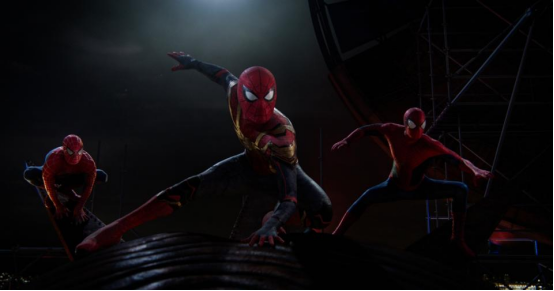
Weaving Heroic Dreams in the Hustle and Bustle of City Life
Spider-Man is arguably the most relatable superhero in modern comic book and cinematic history. Unlike billionaire playboys or god-like aliens, Peter Parker’s narrative is deeply rooted in the gritty, relentless reality of urban existence. The hustle and bustle of New York City is not merely a backdrop for his acrobatic web-slinging; it is a living, breathing entity that constantly tests his resolve. Balancing the mundane challenges of paying rent, attending college classes, and maintaining a social life with the extraordinary demands of fighting supervillains creates a compelling dichotomy. This duality forms the foundation of his heroic dreams, making his triumphs and failures resonate profoundly with audiences worldwide.
The Duality of Peter Parker and Spider-Man
The core of Spider-Man’s enduring appeal lies in the stark contrast between his two identities. As Peter Parker, he is a socially awkward, financially struggling young man who frequently disappoints those he cares about due to his secret life. As Spider-Man, he is a confident, quick-witted vigilante capable of going toe-to-toe with the most terrifying threats the city has to offer. This constant push-and-pull requires immense psychological endurance.
- Financial Instability: Unlike heroes with limitless resources, Peter must monetize his heroics indirectly, often by selling photos of himself to the Daily Bugle, highlighting the working-class struggle.
- Social Isolation: The necessity of maintaining a secret identity forces Peter to build walls between himself and his peers, leading to a profound sense of loneliness even in a city of millions.
- Time Scarcity: The relentless pace of New York City mirrors Peter’s internal clock. Every moment spent saving a life is a moment lost studying for an exam or attending a loved one’s milestone event.
This relentless pressure cooker of city life forces Peter to constantly evaluate his priorities. The heroic dream is not one of glory or fame, but rather a desperate, ongoing attempt to keep his neighborhood safe while trying to carve out a sliver of normalcy for himself.

With Great Power Comes Great Responsibility: The Core Mantra
No phrase is more synonymous with comic book lore than “With great power comes great responsibility.” Originally imparted by his beloved Uncle Ben, this philosophical cornerstone is the absolute driving force behind every decision Peter Parker makes. It is not merely a catchy slogan; it is a heavy, almost suffocating moral imperative that transforms a traumatized teenager into an unyielding protector. The tragic irony of this mantra is that it was born from a moment of selfish inaction—Peter letting a burglar escape, who would later go on to murder Uncle Ben. This original sin ensures that Spider-Man’s heroism is forever intertwined with guilt and a desperate need for atonement.
The Psychological Toll of Unyielding Duty
Living by this mantra requires a level of self-sacrifice that borders on self-destruction. Spider-Man cannot simply walk away when he hears police sirens, even if he is exhausted, injured, or facing personal ruin. The burden of power dictates that inaction is a moral failure. This creates a fascinating psychological landscape where the hero is constantly battling his own desires for a normal life against the crushing weight of his capabilities.
To fully understand how this mantra manifests across different aspects of his life, we can analyze its impact through various lenses:
| Dimension of Responsibility | Impact on Peter Parker’s Life | The Heroic Outcome |
|---|---|---|
| Personal Relationships | Constant flaking on dates, missed family dinners, and lying to protect loved ones. | Keeps his enemies from targeting his vulnerable friends and family. |
| Career & Education | Failing grades, lost jobs, and inability to commit to long-term professional goals. | Ensures that immediate, life-threatening crises in the city are averted. |
| Physical & Mental Health | Chronic fatigue, untreated injuries, and severe emotional trauma from perceived failures. | Develops an unbreakable will and resilience that allows him to defeat superior foes. |
Ultimately, the mantra of power and responsibility is both Spider-Man’s greatest strength and his most profound curse. It elevates him above mere vigilantism, transforming him into a true symbol of selfless heroism.

Self-Reconstruction in the Absence of Fatherly Love
A recurring and deeply poignant theme in the Spider-Man mythos is the chronic absence of a stable father figure. Peter Parker’s life is defined by a series of tragic losses: the mysterious death of his biological father, Richard Parker; the senseless murder of his surrogate father, Uncle Ben; and, in later cinematic iterations, the heroic sacrifice of his mentor, Tony Stark. Each of these losses forces Peter into a painful process of self-reconstruction. He is a young man constantly searching for paternal guidance in a chaotic world, only to have that guidance violently ripped away, leaving him to forge his own moral and ethical framework from the shattered remnants of their legacies.
The Void of the Patriarchal Figure
The absence of fatherly love is not just a backstory element; it is the catalyst for Peter’s psychological evolution. When Uncle Ben dies, Peter internalizes his guilt and adopts his uncle’s moral code as absolute law. However, as he matures, he realizes that the world is not as black and white as a simple proverb suggests. He must learn to navigate moral gray areas without a father to guide him.
- The Ghost of Uncle Ben: Ben represents the idealized, infallible moral compass. His absence leaves Peter constantly questioning if he is living up to an impossible standard of goodness.
- The Tony Stark Dynamic: In the Marvel Cinematic Universe, Tony Stark steps into the void left by Ben. Stark represents the modern, flawed, technologically advanced father figure. When Stark dies, Peter is forced to step out of his mentor’s massive shadow and realize he does not need to be the next Iron Man; he needs to be the best Spider-Man.
- The Villainous Surrogates: Tragically, Peter often seeks mentorship in older, brilliant men who eventually become his greatest enemies—such as Norman Osborn (Green Goblin) and Otto Octavius (Doctor Octopus). This recurring betrayal further isolates Peter, reinforcing the harsh reality that he must rely on his own internal compass.
Through this endless cycle of loss and betrayal, Spider-Man’s self-reconstruction is ultimately successful. He learns that true maturity comes not from finding a father figure to follow, but from becoming the man that his fathers would have been proud of.

Aunt May: The Anchor and Only True Family Member
While much is made of the father figures in Peter Parker’s life, it is Aunt May who serves as his true emotional anchor and his only remaining direct family. May Parker is far more than a frail, elderly woman needing protection; she is the resilient, beating heart of the Spider-Man narrative. Her presence is the tether that keeps Peter connected to his humanity. She represents the everyday citizens of New York that Spider-Man swears to protect, but she also embodies a quiet, unwavering strength that often surpasses even Peter’s superhuman abilities.
Redefining the Maternal Guardian
Over decades of comic book history and multiple film adaptations, Aunt May’s character has evolved significantly, yet her core function remains the same: she is the moral north star when Peter is lost in the darkness. Her influence is subtle but absolute.
In many iterations, May is completely unaware of Peter’s alter ego, creating a tragic dynamic where Peter must lie to the person he loves most to keep her safe. This deception eats away at him, highlighting the isolating nature of his responsibility. However, in more modern interpretations, when May discovers his secret, she does not recoil in fear. Instead, she becomes his most ardent supporter, recognizing the necessity of his sacrifices. She volunteers at homeless shelters, organizes community events, and demonstrates that one does not need superpowers to be a hero. It is from Aunt May that Peter learns compassion, empathy, and the importance of community service.
Her eventual death—whether from old age, illness, or at the hands of a villain like the Green Goblin—is always a catastrophic event in Peter’s life. It forces him into his darkest emotional spaces, testing his commitment to his “no-kill” rule and his fundamental belief in justice. Aunt May is not just Spider-Man’s family; she is the embodiment of his conscience.

Gwen’s Death and MJ’s Choice: The Tragic Love Story
The romantic life of Spider-Man is inextricably linked to tragedy, danger, and impossible choices. The two most prominent women in Peter Parker’s life—Gwen Stacy and Mary Jane (MJ) Watson—represent different eras of his emotional growth, but both narratives are deeply affected by the curse of the Spider-Man persona. To love Peter Parker is to stand in the crosshairs of his enemies, a reality that forces both Peter and his partners to make devastating sacrifices.
The Tragedy of Gwen Stacy
Gwen Stacy represents Peter’s first true, unadulterated love. She is his intellectual equal, his college sweetheart, and a beacon of pure light in his chaotic world. However, her story culminates in one of the most defining and traumatic moments in comic book history: “The Night Gwen Stacy Died.” When the Green Goblin throws Gwen off a bridge, Spider-Man’s attempt to save her with his webbing inadvertently causes a fatal whiplash effect. This is a profound failure that shatters Peter’s soul. Gwen’s death teaches Peter a brutal lesson: his powers are not absolute, and his mere existence puts those he loves in lethal jeopardy. He can save the city, but he could not save the woman he loved.
MJ and the Burden of Choice
If Gwen represents tragic loss, MJ represents resilient survival and the heavy burden of choice. Mary Jane Watson is often depicted as the fiery, independent woman who sees past the mask and loves the broken man beneath it. Unlike Gwen, whose life is taken from her, MJ is frequently placed in a position where she must actively choose to endure the trauma of loving Spider-Man.
- The Choice to Stay: MJ repeatedly chooses to stand by Peter, accepting the terrifying reality that he may not come home one night. This requires immense emotional fortitude, making her a hero in her own right.
- The Choice to Forget: In recent cinematic storylines (such as Spider-Man: No Way Home), the narrative flips the trope. To save the multiverse, Peter makes the agonizing choice to erase himself from MJ’s memory. When he later visits her, he sees she is safe, happy, and unburdened by his dangerous life. He chooses not to remind her of their love, making the ultimate sacrifice of his own happiness for her safety.
Both love stories highlight the central tragedy of Spider-Man: the mask is a barrier to true intimacy. His heroic duties demand a level of isolation that makes sustaining a normal romantic relationship nearly impossible, yet his deep capacity for love is exactly what makes him fight so hard for the world.

The Avengers’ Beloved Little Spider: A Hero’s Evolution
Spider-Man’s integration into the larger superhero community, specifically the Avengers, marks a significant evolution in his character arc. For years, Peter Parker operated as a lone wolf, a street-level vigilante handling muggers and local crime syndicates. However, when thrust into the cosmic, world-ending stakes of the Avengers, Spider-Man transitions from a friendly neighborhood hero to a crucial defender of the universe. Despite his immense power, he is often viewed by the veteran heroes as the “beloved little spider”—a youthful, eager, and somewhat naive kid who brings a much-needed sense of innocence and ground-level perspective to a team of gods, super-soldiers, and billionaire geniuses.
Stepping into the Major Leagues
Spider-Man’s dynamic within the Avengers is entirely unique. He is simultaneously the most inexperienced member and one of the most morally pure. While characters like Captain America and Iron Man are hardened by war and burdened by global political consequences, Peter operates from a place of pure, localized altruism. He doesn’t fight for geopolitical stability; he fights because it is the right thing to do.
This youthful exuberance often manifests in mid-battle pop culture references and a palpable sense of awe at his surroundings. Yet, when the chips are down, Spider-Man consistently proves his worth. His agility, spider-sense, and raw strength make him a formidable combatant, but it is his unyielding spirit that earns him the respect of Earth’s Mightiest Heroes. Whether he is catching a falling Winter Soldier punch with ease or taking on the Mad Titan Thanos in space, Peter demonstrates that the heart of a kid from Queens is just as vital to the universe’s survival as a Wakandan army or an Asgardian hammer.
Ultimately, his time with the Avengers forces Peter to grow up rapidly. He learns the heavy cost of universal warfare, experiences the grief of losing his mentor, and realizes that while he may be the “little spider” to the veterans, he possesses the strength and responsibility to lead the next generation of heroes.
Frequently Asked Questions (FAQ)
- Q1: Why is the phrase “With great power comes great responsibility” so central to Spider-Man’s character?
- This phrase, originally spoken by Uncle Ben, acts as Peter Parker’s ultimate moral compass. It was born out of tragedy—Peter’s failure to stop a thief who later killed his uncle. The immense guilt from this event forced Peter to internalize the mantra, ensuring that he never again uses his powers selfishly or ignores a situation where he could intervene to save lives. It transforms his abilities from a tool for personal gain into a lifelong burden of public service.
- Q2: How does the absence of a father figure affect Peter Parker’s psychological development?
- The chronic loss of father figures (Richard Parker, Uncle Ben, Tony Stark) leaves Peter constantly searching for guidance and validation. This absence forces him into a continuous cycle of self-reconstruction. He must piece together his own ethical framework from the lessons left behind by these men, ultimately learning that he must rely on his own internal strength rather than looking for a patriarchal savior.
- Q3: What makes Aunt May’s role so crucial in the Spider-Man mythos?
- Aunt May is Peter’s emotional anchor and his connection to the everyday humanity he fights to protect. She provides the unconditional love and moral grounding he needs to survive the trauma of his dual life. Whether she knows his secret or not, her resilience and dedication to helping others teach Peter that true heroism doesn’t require superpowers, making her the spiritual backbone of his journey.
- Q4: How do the romances with Gwen Stacy and MJ differ in their impact on Spider-Man?
- Gwen Stacy represents Peter’s first love and his greatest failure; her tragic death teaches him the lethal consequences of his superhero life and the limits of his power. MJ, on the other hand, represents survival and the burden of choice. Her storylines often revolve around the immense emotional toll of actively choosing to love someone in constant danger, or in recent iterations, Peter’s heartbreaking choice to isolate himself from her to keep her safe.
- Q5: What unique dynamic does Spider-Man bring to the Avengers?
- Spider-Man brings a vital “street-level” perspective and youthful innocence to a team composed of hardened veterans, gods, and billionaires. Often seen as the “beloved little spider,” his pure altruism and moral clarity remind the older heroes of what they are ultimately fighting for. Despite his youth, his incredible power and unyielding spirit quickly earn him the respect of Earth’s Mightiest Heroes, positioning him as the heart of the team’s future.